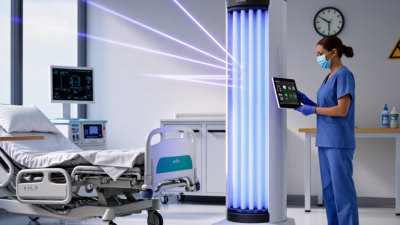
Choosing the right uvc machine for global sourcing requires more than comparing prices, lamp counts, or polished product photos. A reliable decision begins with the intended environment: hospitals, laboratories, offices, food facilities, or empty-room treatment. Each setting demands different exposure limits, shielding methods, airflow patterns, and maintenance procedures. Dr. David J. Brenner, a leading far-UVC researcher, has stated, “Far-UVC light has the potential to be a safe and effective tool for reducing the spread of airborne-mediated microbial diseases.” His statement highlights an important point: performance depends on controlled application, not marketing language.
A practical sourcing review should examine wavelength accuracy, measured irradiance, delivered dose, lamp life, ozone generation, sensor functions, and emergency shutoff systems. Ask suppliers for independent test reports, factory quality records, electrical certifications, and clear user instructions. A device claiming “99.9% disinfection” is not enough. Request the test organism, exposure distance, humidity, surface type, and treatment time. These details reveal whether the result applies to your facility.
Global buyers should also inspect packaging, spare-part availability, warranty terms, software support, and installation training. A low-cost uvc machine may become expensive when replacement lamps arrive late or calibration is unavailable. I have found that supplier communication often reveals more than a product brochure. Can the manufacturer explain dose calculations clearly? Can it provide traceable measurements?
No checklist is perfect. Product specifications may change, and laboratory results may not represent every real room. Treat every claim as a question requiring evidence. The strongest choice balances verified safety, measurable performance, practical service, and responsible compliance across the target market.
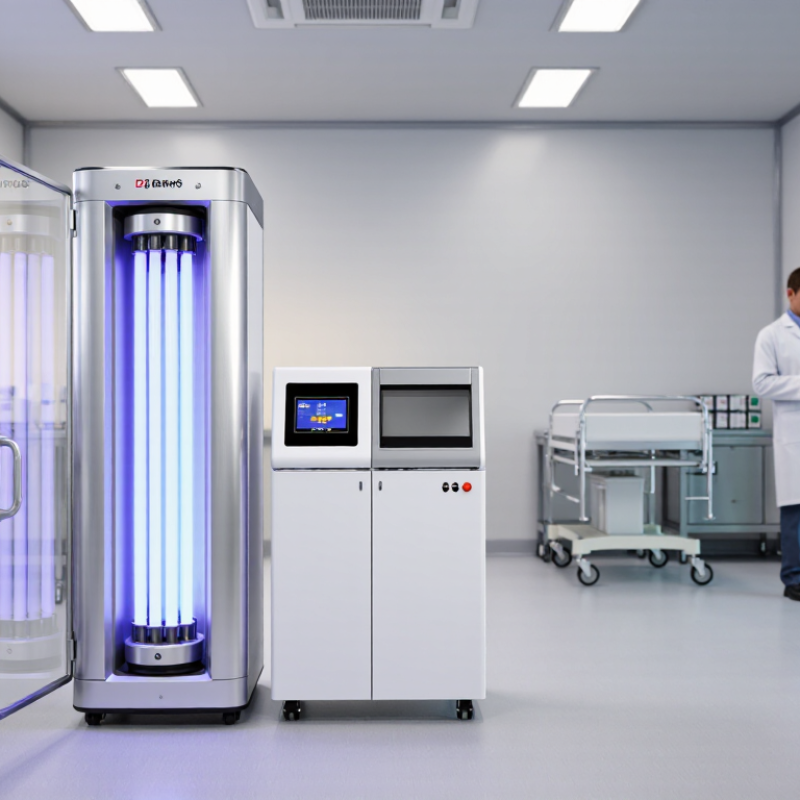
Choosing a UVC machine starts with the treatment target, not the lamp wattage. UVC systems generally include low-pressure mercury, UVC LED, excimer, and pulsed xenon types. Low-pressure mercury units commonly emit near 254 nanometers. They suit water channels, air handlers, and enclosed chambers. UVC LEDs offer compact designs and instant switching, but efficiency and lifetime vary widely. Excimer systems can generate around 222 nanometers, requiring careful exposure and ozone evaluation. Pulsed xenon devices deliver short, intense flashes for controlled surface treatment. The choice is less glamorous than catalog pages suggest.
Application conditions decide performance. In water, check flow rate, turbidity, UV transmittance, and validated dose. The WHO/UNICEF Joint Monitoring Programme 2023 report states that 2.2 billion people lacked safely managed drinking water in 2022. That figure shows why reliable water disinfection matters for decentralized facilities. For air, upper-room or in-duct systems need airflow design, mixing, and maintenance. The 2023 ASHRAE Epidemic Task Force guidance stresses engineered placement, not simple lamp installation. Surface machines need clear line-of-sight coverage. Dust and shadows can leave untreated zones.
For global sourcing, request independent test data under real operating conditions. Ask for irradiance maps, dose calculations, sensor calibration records, aging curves, and electrical certifications. A machine rated at 100 watts may deliver modest germicidal output. That distinction matters. Inspect interlocks, shielding, access controls, replacement-part availability, and local service capability. Procurement teams often compare price first, but total cost includes validation, cleaning, downtime, and worker training. One unresolved concern remains: newer 222-nanometer claims need product-specific evidence, because wavelength alone does not prove safe or effective treatment.
When sourcing a UVC machine globally, evaluate measurable performance rather than attractive housing or marketing claims. The target wavelength matters. Low-pressure lamps commonly operate near 254 nanometres, while LED systems may use different UVC bands. Ask for spectral test data, not only a product label. Confirm irradiance in microwatts per square centimetre at the actual treatment distance. A powerful lamp can perform poorly when airflow moves too quickly.
Dose depends on irradiance and exposure time. Request a dose map showing results across the chamber, conveyor, or duct. Uneven corners often create weak treatment zones. Check whether the supplier tested the machine under realistic conditions, including dust, humidity, and maximum loading. Independent laboratory reports are more useful than isolated factory readings. I would also inspect sensor calibration records and ask how frequently measurements are repeated.
Reliability needs equal attention. Review lamp or LED life, cooling design, power stability, and replacement procedures. Thermal protection should prevent performance loss during long cycles. Enclosures need effective interlocks that stop UVC emission when opened. Ozone generation should be disclosed and controlled where relevant. Electrical safety documentation must match the destination market, because requirements differ globally. I have seen promising units fail during continuous testing because heat was ignored. That experience makes me cautious. Supplier answers should be specific, traceable, and supported by test records. Performance claims without test conditions deserve further questioning.
| Evaluation Category | Key Technical Specification | Typical Reference Value | Why It Matters for Sourcing | Recommended Verification Method |
|---|---|---|---|---|
| UV Output | Germicidal wavelength | 254 nm for low-pressure mercury lamps; approximately 265–280 nm for many UVC LEDs | UVC effectiveness depends strongly on wavelength. Around 265 nm is close to the peak DNA absorption region, while 254 nm systems are widely used and well established. | Request a calibrated spectral measurement or an independent laboratory test report. Do not rely only on the lamp label. |
| Disinfection Performance | Delivered UVC dose | Common design levels: 16 mJ/cm², 30 mJ/cm², 40 mJ/cm², or higher, depending on the target organism and application | Dose is the product of irradiance and exposure time. A higher rated lamp power does not automatically mean a higher delivered dose. | Compare validated dose data at the actual flow rate, air volume, surface distance, temperature, and equipment condition. |
| Water Treatment | Maximum flow rate | Application-dependent; residential units may handle tens of litres per minute, while commercial systems may handle hundreds or more | Flow rate directly affects exposure time. A unit should be selected according to the required design flow rather than its maximum theoretical flow. | Check a dose-flow curve and confirm the tested flow rate at the required dose, not only the pump or pipe size. |
| Water Treatment | UV transmittance requirement | Many systems are designed around approximately 85%–95% UVT at 254 nm; the exact requirement is application-specific | Low UV transmittance caused by turbidity, color, iron, manganese, or organic matter can reduce the dose reaching microorganisms. | Request the permitted UVT range and test the source water at 254 nm before final equipment selection. |
| Air Treatment | Airflow and exposure arrangement | Performance depends on airflow, chamber geometry, lamp irradiance, and the number of air passes | Air disinfection cannot be evaluated from lamp wattage alone. Short residence time requires sufficient irradiance and optimized airflow management. | Request test results using the intended airflow in m³/h or CFM, including microbial reduction and pressure-drop data. |
| Lamp or LED System | Rated service life | Low-pressure mercury lamps commonly provide about 8,000–12,000 operating hours; UVC LED life varies by design and thermal management | UVC output normally decreases over time. A longer electrical life does not necessarily equal a longer useful disinfection life. | Ask for end-of-life UVC output, not only electrical lifetime. Confirm replacement intervals and availability of compatible parts. |
| Lamp or LED System | Output stability | Performance can be affected by ambient temperature, aging, power fluctuations, and LED junction temperature | Unstable output can cause inconsistent disinfection and makes field performance difficult to verify. | Check whether the system includes output monitoring, temperature control, regulated current, or a lamp-failure alarm. |
| Monitoring and Control | UVC intensity sensor | Preferred for critical water and air applications; alarm thresholds should be defined by the validated process | A sensor can identify lamp aging, fouling, sleeve contamination, or a sudden reduction in UVC output. | Confirm sensor calibration procedures, alarm settings, display accuracy, and whether the sensor measures UVC intensity rather than visible light. |
| Monitoring and Control | Flow or airflow interlock | Recommended where exposure or operator safety could be compromised by incorrect flow conditions | An interlock can prevent operation outside validated conditions and can reduce the risk of untreated water or air bypassing the process. | Verify shutdown logic, restart behavior, alarm history, and compatibility with the buyer’s control system. |
| Pressure and Mechanical Design | Pressure rating and pressure drop | Must match the installation pressure; pressure drop is generally kept low to avoid unnecessary pumping energy | Incorrect pressure selection can create leakage or safety risks, while excessive pressure drop increases operating costs. | Request the maximum working pressure, hydrostatic test pressure, connection standard, and pressure-drop curve. |
| Materials | Reactor and sleeve materials | 304 or 316 stainless steel reactors are common; quartz sleeves are widely used for lamp protection | Material selection affects corrosion resistance, cleanability, UV transmission, and service life. | Confirm material grades, surface finish, quartz transmission data, gasket materials, and compatibility with the treated medium. |
| Maintenance | Quartz sleeve cleaning and replacement | Cleaning frequency depends on water quality, fouling rate, operating hours, and UVT | Deposits on the sleeve can significantly reduce delivered UVC intensity even when the lamp is still operating. | Check whether the design supports manual cleaning, mechanical wiping, or chemical cleaning and whether replacement can be performed without special tools. |
| Electrical System | Input voltage and frequency | Common international supplies include 100–240 V AC and 50/60 Hz, but the actual model must be verified | Global sourcing requires compatibility with the destination country’s electrical infrastructure and installation rules. | Review the nameplate, wiring diagram, power consumption, inrush current, grounding requirements, and available plug or terminal options. |
| Safety | UVC exposure protection | Enclosed systems should prevent direct viewing or skin exposure during normal operation | Short-wave UVC can injure eyes and skin. Safety design is essential for commercial, industrial, and consumer installations. | Verify opaque housing, door or cover interlocks, warning labels, emergency shutdown, leakage testing, and operating instructions. |
| Compliance | Market-specific conformity documentation | Requirements vary by destination and application; electrical safety, electromagnetic compatibility, and hazardous exposure controls may apply | Documentation gaps can delay customs clearance, installation approval, or customer acceptance. | Request applicable declarations, test reports, technical files, user manuals, risk assessments, and traceable serial-number records. |
| Commercial Evaluation | Total cost of ownership | Includes purchase price, electricity, lamp or LED replacement, sleeve cleaning, sensors, filters, labor, and disposal | The lowest purchase price may result in higher operating costs or more frequent maintenance over the equipment lifecycle. | Compare a three- to five-year cost model using the same validated dose, flow rate, operating hours, energy tariff, and maintenance assumptions. |
Safety must guide every UVC purchasing decision. UVC radiation can damage eyes and skin within a short exposure period. Choose equipment with a fully enclosed treatment chamber, reliable door interlocks, and automatic shutoff sensors. A visible warning light helps operators understand when the lamp is active. Remote controls should not bypass essential safety functions. Test the machine for radiation leakage around doors, seams, and ventilation openings.
Regulatory compliance requires more than a supplier’s declaration. Request current test reports from an independent laboratory accredited to ISO/IEC 17025. Check whether the product was assessed under relevant photobiological safety requirements, such as IEC 62471. Electrical safety standards may also apply, depending on the machine’s design and destination market. Confirm voltage, plug type, electromagnetic compatibility, labeling, and user instructions before shipment. Requirements differ across countries.
Ask for measured UVC output, exposure time, lamp lifespan, and ozone emissions. Do not rely only on advertised disinfection percentages. Results depend on distance, shadowing, surface texture, and maintenance. A low reading may indicate aging lamps or poor calibration. That detail is easy to miss. Keep batch records, inspection photos, and calibration documents for future audits. I would also arrange a sample inspection before a large order. Suppliers can provide complete documents, yet the delivered machine may still differ. Recheck the actual unit.
Choosing the best UVC machine for global sourcing requires more than comparing prices. Supplier capability matters first. During a factory audit, inspect assembly lines, optical testing equipment, and component traceability. Ask how technicians verify lamp output after installation. Request production samples, not only polished showroom units. A reliable supplier should explain failure rates, maintenance intervals, and replacement procedures clearly.
Manufacturing quality appears in small details. Check shielding, door interlocks, timer accuracy, cooling systems, and warning labels. Confirm that the machine delivers the stated UVC dose across its treatment area. Uneven exposure can reduce performance. Ask for independent laboratory reports covering irradiance, electrical safety, and ozone emissions where relevant. I have found that vague test data often signals weak process control. That does not always mean poor equipment, but it deserves closer questioning.
Certifications must match the destination market and machine category. Review test reports, declarations, factory quality records, and applicable safety marks. Verify certificate numbers with the issuing organization when possible. A supplier’s certificate may cover one model, not an entire product family. That mistake is common. Also examine packaging, multilingual instructions, spare parts, and after-sales response times. A factory may produce excellent units yet struggle with documentation. Global sourcing exposes that gap quickly. Choose evidence over confident promises.
A practical 100-point sourcing model for comparing supplier qualification, manufacturing quality, UVC performance, safety, and certification evidence.
The scorecard prioritizes documented manufacturing controls, verified UV-C output, risk controls, and applicable standards. Typical evidence includes ISO 9001 quality systems, ISO 13485 for applicable medical devices, IEC 62471 photobiological safety assessment, and the relevant electrical or product safety standard for the machine category.
How to Choose the Best UVC Machine for Global Sourcing?
A low purchase price can hide serious ownership costs. Compare the machine, spare parts, training, testing, and energy consumption together. Cheap is not cheap. Request a clear quotation with shipping terms, packaging details, and replacement component prices. A unit needing frequent lamp changes may cost more than expected. Ask for measured UVC output, exposure data, and independent test records. Marketing claims alone are not enough.
Logistics can decide whether a suitable machine arrives safely and on time. Check crate dimensions, gross weight, voltage requirements, plug types, and humidity protection before ordering. Confirm whether the supplier can provide export documents and installation instructions in clear English. A compact machine may reduce freight costs, but fragile sensors still need careful packing. Delays become expensive. One overlooked customs document can hold equipment for weeks, disrupting a planned facility upgrade.
Long-term support deserves the same attention as performance. Confirm warranty coverage, remote troubleshooting, spare-parts availability, and technician response times. Ask how software updates, calibration checks, and operator training will be handled after delivery. A reliable supplier should provide serial-number tracking and service records. Support matters. Still, no supplier can replace careful local maintenance. Buyers sometimes overestimate warranty protection and underestimate downtime. Build a realistic service budget, keep essential parts nearby, and test communication before signing a long-term agreement.
This website uses cookies to ensure you get the best experience on our website. Learn More
ACCEPT