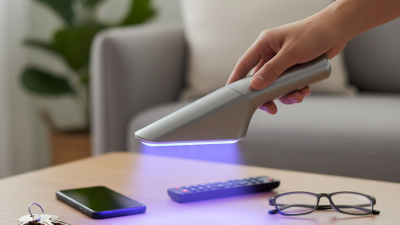
China Top UV Light Cleaner for Hospitals How to Choose?

For hospitals comparing equipment, the phrase uv light cleaner hospital often hides an important question: what does the device truly achieve? A dependable UV-C system should support environmental cleaning, not replace trained staff, approved disinfectants, or careful surface preparation. Hospital teams should examine measured UV dose, coverage distance, cycle records, lamp performance, and safety controls. A bright lamp proves little. Effectiveness depends on exposure, positioning, surface type, and hidden areas.

A practical evaluation begins in real rooms. Place the unit near a bed, curtain, trolley, and high-touch handle. Check whether its sensors detect movement before treatment starts. Review how operators verify completed cycles. Look for clear instructions, durable wheels, easy-to-clean housing, and accessible maintenance records. Independent testing and documented quality systems add credibility, but buyers should still request evidence for the intended room size and microorganisms. Claims such as “sterilizes everything” deserve caution.

Experience also reveals weaknesses. Shadows remain a problem. Dust can reduce performance. Busy wards may interrupt treatment cycles. Staff may need simple training and visible warnings. These details are easy to overlook. They matter greatly.

A strong supplier explains limitations instead of promising perfection. The best choice should fit infection-control procedures, facility design, staff routines, and local requirements. Hospitals should compare total ownership costs, including lamp replacement, calibration, training, and service response. This article explores those practical criteria and the questions buyers should ask before selecting a China-made UV light cleaner for hospital use.
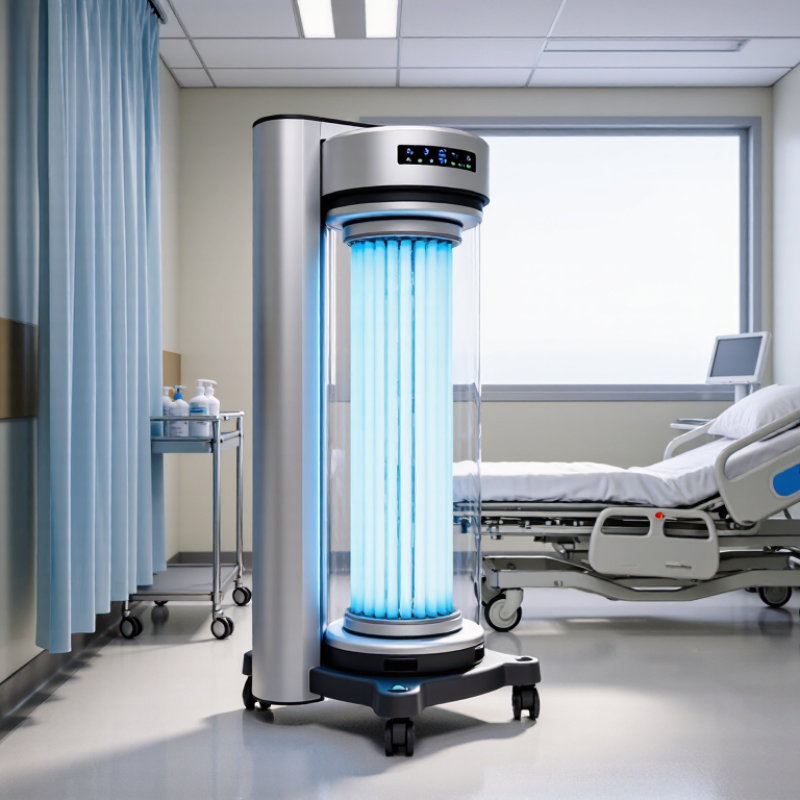
China Top UV Light Cleaner for Hospitals How to Choose?

Define Hospital UV-C Cleaning Needs and Target Pathogens (CDC, 2023)

China Top UV Light Cleaner for Hospitals: How to Choose?

Hospital UV-C cleaning should begin with a clear infection-control question, not a product comparison. CDC guidance published in 2023 supports environmental cleaning as part of a broader prevention program. UV-C may provide supplemental disinfection after manual cleaning. It should not replace detergent, approved disinfectants, or trained staff.

Define the target area first. A patient room, operating theatre, isolation room, and ventilation system require different approaches. Inspect bed rails, call buttons, overbed tables, door handles, and equipment seams. Measure the room. Shadows matter. A UV-C unit cannot treat surfaces it cannot directly reach.

Identify the pathogens creating the greatest risk. Common concerns may include MRSA, VRE, influenza viruses, SARS-CoV-2, and C. difficile spores. Vegetative bacteria and many viruses often respond differently from spores. Required UV-C dose depends on organism, distance, lamp output, exposure time, and surface condition. Dust, moisture, and uneven placement can reduce performance.

Ask for independent test data, irradiance measurements, maintenance records, and a documented safety process. Operators need controls that prevent exposure to patients and staff. Use sensors or warning systems where appropriate. Keep a room log with cycle time, location, and verification results.

A common mistake is choosing a high-output device without mapping the room. More power does not guarantee complete coverage. In practice, placement often matters more than advertised intensity. Recheck results after furniture changes or new equipment arrives. Some assumptions will be wrong. Document them, then improve the protocol.

Compare 254 nm and 222 nm UV-C Options Using ISO 15858 Safety Data

For hospitals, choosing between 254 nm and 222 nm UV-C starts with verified safety data, not marketing claims. ISO 15858:2016 requires manufacturers to provide exposure, hazard, and operating information for UV-C devices. It does not certify a product as automatically safe. That distinction matters in occupied corridors and patient rooms.

A 254 nm system can deliver strong germicidal performance, but direct exposure can injure eyes and skin. The 2020 ICNIRP guidelines list an effective exposure limit of about 6 mJ/cm² at 254 nm. At 222 nm, the guideline value is approximately 23 mJ/cm². These limits still depend on measured spectral output, exposure time, and installation geometry. CIE’s 2023 UV-C position statement also stresses that dose, not lamp power alone, determines microbial inactivation.

222 nm is promising for occupied-space applications, yet it needs careful verification. A filtered source should show its complete spectrum, including unwanted longer wavelengths. Ask for independent irradiance mapping at eye level, sensor calibration records, interlock testing, and maintenance intervals. A 254 nm fixture may be suitable inside an empty isolation room, with door controls and occupancy sensors. A 222 nm unit may fit a busy waiting area, but only after exposure calculations and commissioning. Real hospitals are imperfect environments. Dust, shadows, ceiling height, and reflective surfaces can change results. Procurement teams should review these details instead of trusting a single laboratory number.

Calculate Verified UV-C Dose: Irradiance × Exposure Time (ANSI/IES RP-44)

Choosing a UV light cleaner for hospitals requires more than comparing lamp wattage. The critical measurement is UV-C dose, calculated as irradiance multiplied by exposure time. Irradiance shows the energy reaching a surface, usually in mW/cm². Exposure time is measured in seconds. Their product gives dose in mJ/cm².

For example, 2 mW/cm² applied for 60 seconds delivers 120 mJ/cm². However, this value must be verified at the target surface. Follow measurement principles in ANSI/IES RP-44, and use a calibrated UV-C radiometer. Take readings at several points, including corners, lower shelves, and areas behind equipment. A single center reading can create false confidence. Distance matters greatly. So does shadowing.

Hospital buyers should request test reports for the intended organism and surface condition. They should also check lamp aging, sensor accuracy, interlock functions, and cleaning compatibility. In practical assessments, reflective stainless steel may improve coverage, but it cannot remove every shadow. Some equipment designs look powerful yet deliver uneven doses. That is a serious weakness.

A realistic verification process records room dimensions, exposure time, irradiance readings, and maintenance dates. Repeat testing after lamp replacement or major repairs. The calculation is simple. The field conditions are not. Safety controls must prevent exposure to patients, staff, and visitors during operation.

China Top UV Light Cleaner for Hospitals: How to Choose?

Calculate verified UV-C dose using the engineering relationship: Dose = Irradiance × Exposure Time. The chart shows the exposure time required to deliver a calculated dose of 40 mJ/cm² at different measured UV-C irradiance levels.

Calculation basis: 1 mW/cm² × 1 second = 1 mJ/cm². Required exposure time = target dose ÷ measured irradiance. Values are engineering calculations for comparison; actual hospital validation should use calibrated UV-C radiometer readings, account for distance, angle, shadowing, surface reflectance, lamp aging, and the applicable ANSI/IES RP-44 design and measurement requirements. UV-C systems must be operated with appropriate personnel-safety controls.

Assess Room Coverage, Shadowing, Sensors, and Cycle Validation (ASHRAE)

Choosing a hospital UV light cleaner requires more than checking lamp power. Room coverage must match the measured floor area, ceiling height, and treatment distance. ASHRAE Handbook—HVAC Applications (2023) emphasizes airflow, exposure time, and equipment placement when evaluating air-cleaning performance. A device rated for 100 square meters may perform differently in a crowded ward.

Shadowing is the difficult part. Beds, curtains, cabinets, and equipment can block UV-C from surfaces. Controlled studies often report over 90% reductions on directly exposed surfaces, but protected areas may receive almost no effective dose. CDC environmental infection-control guidance also stresses cleaning, airflow, and maintenance alongside ultraviolet treatment. The room should be mapped, not guessed. Walk the space.

Sensors can improve control, but they need verification. Door sensors, motion detectors, lamp-life indicators, and dose sensors should record every cycle. ASHRAE Standard 241-2023 supports evaluating infection-control capacity through equivalent clean airflow, rather than relying on wattage alone. Ask for irradiance measurements at several room points. Request a cycle-validation report using biological or calibrated radiometric methods. It should show distance, exposure time, surface position, and repeatability. In practice, logs are sometimes incomplete. That is a warning. Validate the actual room, because a perfect laboratory cycle may fail beside a shadowed bed.

China Top UV Light Cleaner for Hospitals How to Choose? - Assess Room Coverage, Shadowing, Sensors, and Cycle Validation (ASHRAE)

Selection Dimension What to Assess Evidence to Request Practical Evaluation
Intended use and UV-C source Confirm whether the system is intended for air treatment, exposed-surface treatment, or both. Check the stated wavelength and lamp or emitter technology; UV-C systems are not interchangeable solely because they use ultraviolet light. Technical data identifying the wavelength range, intended application, operating conditions, and any relevant safety documentation. Match the device to the infection-prevention task. Do not treat an air-disinfection claim as proof of effective room-surface treatment.
Room coverage and cycle time Coverage depends on room dimensions, device placement, surface distance, orientation, and the required UV dose. Irradiance decreases with distance, and a larger room does not necessarily receive uniform exposure. Room-layout guidance, coverage assumptions, irradiance or dose data at stated distances, and the conditions used to determine cycle duration. Compare the proposed cycle with the actual room layout and target surfaces. Treat any stated room area or cycle time as conditional on the test setup, not as a universal guarantee.
Shadowing and line of sight UV-C generally disinfects only surfaces receiving sufficient direct exposure. Beds, equipment, furniture, linens, and room geometry can create shaded areas; reflected UV should not be assumed to deliver an adequate dose. Test results or a documented placement protocol addressing representative high-risk and obstructed locations. Identify surfaces behind or beneath equipment and other likely shadow zones. Determine whether repositioning or additional cycles are required and include those steps in the room protocol.
Cycle validation and dose measurement Delivered dose is the product of irradiance and exposure time, but dose varies by position and orientation. A cycle should be evaluated against a defined target organism and a clearly stated performance endpoint. Validation method, test conditions, calibrated measurement equipment, measurement locations, repeatability data, and the basis for the claimed microbial reduction. Validate the cycle under representative room conditions, including the least-exposed relevant locations. There is no single UV-C dose or cycle time that is appropriate for every organism, surface, and room.
Occupancy and safety interlocks Germicidal UV-C can injure eyes and skin. Assess how the system prevents unintended exposure, including during entry, cycle interruption, or equipment faults. Documented occupancy detection, door or motion interlocks where applicable, emergency stop, warning indicators, and safe restart instructions. Test safety functions before clinical use and establish procedures for staff entry, interrupted cycles, and fault conditions. Do not rely on warning labels alone as the exposure-control plan.
Sensors and cycle monitoring Determine what sensors actually monitor, such as occupancy, door status, lamp output, or cycle completion. A timer or “cycle complete” signal does not by itself prove that every target surface received an effective dose. Sensor descriptions, alarm behavior, fault reporting, cycle logs, and information about whether output is measured directly or inferred. Check that logs record enough information for local review, such as cycle status, interruptions, and relevant faults. Confirm sensor function during commissioning and scheduled maintenance.
Installation and operating workflow Assess power requirements, mobility, storage, room preparation, cleaning compatibility, staff training, and how the device fits into terminal-cleaning procedures. Installation instructions, room-preparation checklist, operator training materials, and a documented workflow for routine use. Run a workflow trial in the intended care area. Include room turnover time, repositioning steps, communication with staff, and procedures for keeping people out of the treatment area.
Maintenance and output degradation UV-C output can change with lamp age, contamination, component condition, and operating environment. Some source types also require different inspection and replacement practices. Maintenance schedule, cleaning instructions, output-check method, replacement criteria, and records needed to track service. Set a documented maintenance and output-verification schedule. Reassess cycle performance after source replacement, repair, or a significant change in room setup.
Standards and claims review Check whether cited standards or guidance apply to the device and use case. ASHRAE publications include UV-related methods and guidance for HVAC applications, but an HVAC test method is not automatically a certification of whole-room surface-disinfection cycles. Exact standard or guidance title, edition, scope, and a clear explanation of how the test relates to the claimed hospital-room application. Ask for evidence specific to the intended room use. Review performance, safety, and regulatory claims with the facility’s infection-prevention, engineering, and safety teams.
Procurement decision Compare validated performance, safety controls, workflow fit, maintenance burden, and total operating requirements rather than relying on a single coverage figure or marketing claim. A complete technical file, written operating protocol, validation summary, service plan, and a clear list of limitations. Use a site-specific evaluation and documented acceptance criteria before routine deployment. Keep the UV-C process as a complement to, not a replacement for, established cleaning and disinfection procedures.

Audit Chinese Suppliers Through IEC 62471, ISO 9001, and Test Reports

Choosing a Chinese UV light cleaner for hospitals requires more than checking output power. In procurement reviews, I examine IEC 62471 evidence first. This standard assesses photobiological risks from optical radiation, including eye and skin exposure. It does not prove disinfection performance. That distinction matters in clinical environments. Request the exact model number, tested wavelength, irradiance, exposure distance, and safety classification.

ISO 9001 certification can indicate a controlled quality management system. However, it is not a product approval or a guarantee of consistent UV dosage. Verify the certificate’s validity, issuing body, factory address, and certification scope. The supplier should also explain production inspections, lamp aging controls, electrical safety checks, and calibration procedures. Ask for records, not confident promises. Small details often reveal weak systems.

Test reports deserve careful reading. Check whether an independent, competent laboratory performed the testing. Compare the report model, sample condition, test date, and measured results with the offered unit. A report using a different lamp configuration may have limited value. I have seen impressive-looking documents with missing test distances and unclear measurement methods. That is a warning, not a minor paperwork issue. Request raw data where possible, inspect safety interlocks, and arrange a sample evaluation under realistic hospital conditions. A clean certificate file can still hide practical gaps.