


10 Best UVC Sterilisers Which One Should You Buy?
Choosing a reliable uvc steriliser requires more than comparing lamp wattage or attractive product images. It requires evidence, safe design, and realistic expectations.
The U.S. Food and Drug Administration explains that UV-C products may reduce microorganisms, but effectiveness depends on exposure time, distance, dose, and surface coverage. The Centers for Disease Control and Prevention also describes ultraviolet germicidal irradiation as a supplementary control, not a universal replacement for cleaning. That distinction matters. A sealed box may treat a phone or toothbrush more evenly than an open lamp, yet hidden areas can remain untreated.
Small details matter.
The International Ultraviolet Association highlights dose measurement, maintenance, and lamp aging as important performance factors. Meanwhile, the International Electrotechnical Commission’s IEC 62471 framework supports photobiological safety assessment for light-based equipment. These references help separate tested products from marketing claims. They also remind buyers that “99.9% effective” means little without a stated organism, test method, distance, and exposure time.
This guide reviews 10 best UVC sterilisers through that practical lens. We consider shielding, interlocks, cycle controls, material compatibility, independent testing, and everyday usability. We also acknowledge an uncomfortable point: no consumer device is perfect. Dust, shadows, weak batteries, and rushed cycles can undermine performance. Some products may look impressive but provide limited technical evidence. The strongest choice is therefore not necessarily the most powerful model. It is the one that delivers a documented dose safely, fits your routine, and makes its limitations clear.
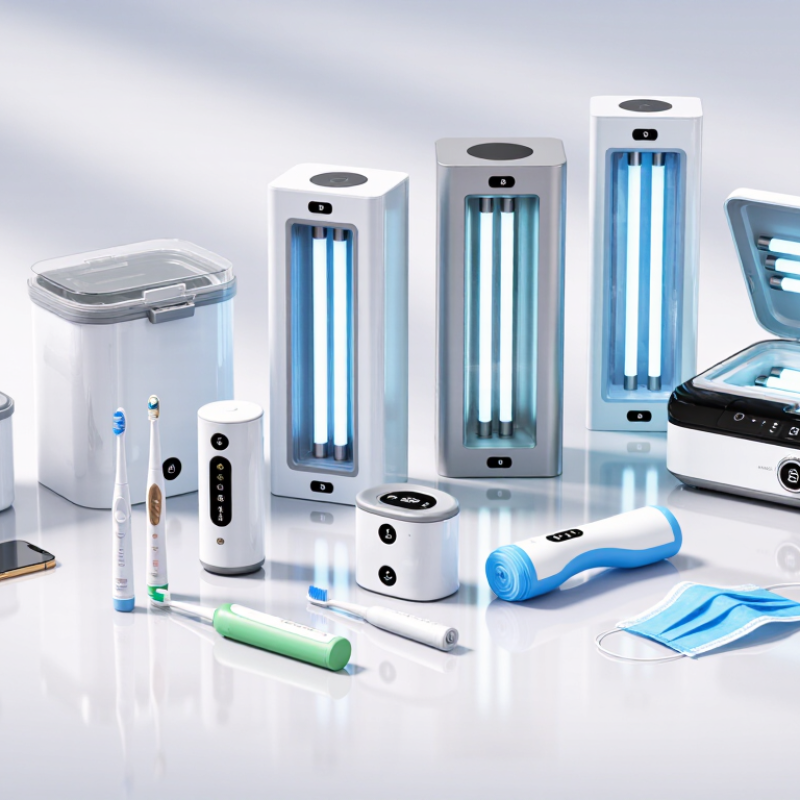
What UVC Sterilisers Are and How They Work
What UVC Sterilisers Are and How They Work
UVC sterilisers use ultraviolet-C light to damage microbial DNA and RNA. The International Ultraviolet Association defines UVC as wavelengths from 100 to 280 nanometres. Many commercial devices operate near 254 nanometres. At this range, microorganisms may lose the ability to reproduce. That is the practical goal, not guaranteed sterilisation.
Performance depends on dose, distance, exposure time, and surface coverage. The International Commission on Non-Ionizing Radiation Protection states that UV-C exposure can harm eyes and skin. Therefore, enclosed chambers, safety switches, and reliable timers matter. A device with a bright lamp is not automatically effective. Light cannot disinfect shaded areas, fabric folds, or surfaces covered by dust. That limitation is easy to miss.
Professional testing should report irradiance and delivered dose, usually in millijoules per square centimetre. The CIE describes UV-C safety through photobiological exposure limits, while IEC 62471 provides a recognised lamp-safety assessment framework. Look for independent testing, clear chamber dimensions, and instructions for reflective or uneven objects. Avoid products making absolute claims without test conditions. Real-world results can be less impressive than laboratory results. I would also question vague words such as “instant” and “chemical-free,” because neither explains the delivered dose.
10 Best UVC Sterilisers: Which One Should You Buy? — What UVC Sterilisers Are and How They Work
| Rank | UVC Steriliser Type | Typical UVC Source | Best For | How It Works | Main Advantages | Important Limitations | Safety Level |
|---|---|---|---|---|---|---|---|
| 1 | Enclosed UVC Cabinet | Usually 253.7 nm mercury lamp or 260–280 nm UVC LEDs | Small household items, tools, personal accessories | Items are placed inside a closed chamber, where UVC light exposes accessible surfaces from one or more directions. | Reduces direct eye and skin exposure; consistent positioning; often includes an automatic shut-off. | Shadows, overlapping objects, dirt and textured surfaces can prevent adequate exposure. | High when interlocked |
| 2 | UVC Air Disinfection Unit | Commonly 253.7 nm or approximately 265 nm | Reducing airborne microorganisms in occupied rooms or HVAC systems | A fan moves air through a shielded UVC chamber, allowing repeated exposure as air circulates. | Can operate continuously without directly exposing room occupants when properly enclosed. | Performance depends on airflow rate, lamp output, chamber design, filtration and maintenance. | High when fully enclosed |
| 3 | UVC Water Disinfection Reactor | Usually 253.7 nm low-pressure mercury or UVC LED systems | Clear, pre-filtered water systems | Water flows around a protected lamp or LED module, and the delivered UVC dose damages microbial DNA or RNA. | No chemical residue; works continuously in properly sized treatment systems. | Turbidity, color, flow speed and lamp fouling can substantially reduce the delivered dose. | High in a sealed system |
| 4 | UVC Surface Disinfection Box | 254 nm mercury lamp or 260–280 nm UVC LEDs | Flat, non-porous objects such as phones, keys and laboratory tools | A reflective enclosure delivers UVC to exposed surfaces during a timed cycle. | Compact, repeatable and generally easier to use than an open lamp. | The underside and areas blocked by accessories may receive little or no UVC. | High when closed |
| 5 | UVC Wand | Often 254 nm or UVC LEDs in the 260–280 nm range | Targeted treatment of exposed, hard surfaces | The operator holds the lamp near a surface for a specified time and distance. | Portable and useful for irregular locations that cannot accommodate a cabinet. | Dose is difficult to verify; movement, distance and shadows strongly affect results. | High exposure risk |
| 6 | UVC Conveyor or Pass-Through Tunnel | Usually 253.7 nm lamps or high-output UVC LEDs | Repeated treatment of packages, equipment or production items | Items pass through a shielded zone at a controlled speed and receive a measured exposure. | Good process consistency when speed, lamp output and item orientation are controlled. | Requires careful engineering; irregular shapes and shadowed areas remain difficult to treat. | High when shielded |
| 7 | UVC HVAC Coil and Duct System | Typically 253.7 nm germicidal lamps | Air-conditioning coils, drain pans and internal duct surfaces | Fixed lamps illuminate surfaces or moving air inside mechanical ventilation equipment. | Can help control microbial growth on damp coils and reduce airborne contamination in the air path. | Installation must account for airflow, lamp aging, surface distance and safe access for maintenance. | High when enclosed |
| 8 | UVC LED Spot Disinfector | Commonly 265–280 nm LEDs | Small targeted areas and compact equipment | One or more LEDs deliver UVC to a defined area at close range. | Mercury-free design, instant switching and flexible compact form factors. | LED output and lifetime vary; lower optical power may require closer placement or longer cycles. | Requires shielding |
| 9 | Far-UVC Air System | Approximately 222 nm filtered excimer light | Specialist occupied-space air-disinfection applications | Filtered far-UVC is designed to inactivate airborne microorganisms while limiting penetration into biological tissue. | Potentially suitable for carefully designed occupied-space systems. | Requires certified filtering, exposure controls, regulatory compliance and professional installation; evidence and standards continue to develop. | Professional use recommended |
| 10 | Portable UVC Room Unit | Often 254 nm or 260–280 nm UVC LED arrays | Unoccupied rooms, treatment areas and equipment spaces | The unit illuminates exposed room surfaces or circulates air during a timed, unattended cycle. | Can treat larger spaces than a small cabinet and may include motion sensors or remote controls. | People, animals and plants must be excluded unless the system is specifically designed and certified for occupied use. | Unoccupied use only |
Buying priority: choose a fully enclosed device with a verified wavelength, automatic shut-off, documented dose or cycle information, and clear maintenance instructions. Never look directly at active UVC light or expose unprotected skin, eyes, animals or plants.
Related Posts
-
Top Benefits of Using a UVC Sterilizer for Home and Health?
-
Why Choose a UVC Machine for Global Sourcing?
-
Top 10 UVC Light Sterilizers for Global Buyers
-
2026 Best Pulsed UV Disinfection Solutions for Global Buyers?
-
2026 Top UV Light Decontamination Types for Global Buyers
-
2026 Best UV Light Decontamination Methods for a Safer Environment?