Global sourcing teams face a practical question: why choose a uvc machine instead of relying only on chemical cleaning or conventional filtration? The answer begins with changing facility needs. Warehouses, clinics, food-processing rooms, laboratories, and commercial buildings increasingly require repeatable hygiene controls with clear operating records.
Industry research supports this direction. Grand View Research’s UV Disinfection Equipment Market Size, Share & Trends Analysis Report identifies water, air, and surface disinfection as major application areas. Its findings also reflect rising demand for automated treatment systems across commercial and industrial environments. However, market growth alone does not prove product quality. That needs careful verification.
The CIE Position Statement on Germicidal UV-C and the IES Committee Report on Germicidal Ultraviolet Disinfection explain an important limitation. UVC performance depends on dose, exposure time, distance, lamp output, and surface conditions. Dust can reduce results. Shadows can create untreated areas. Real rooms rarely behave like laboratory chambers.
That is why experienced buyers should evaluate more than advertised wattage. Ask for irradiance measurements, independent test data, maintenance instructions, and safety interlocks. ASHRAE’s HVAC Applications guidance also emphasizes system design, airflow, and human exposure control. A reliable uvc machine should support documented validation, not replace it.
The decision is not automatic.
Global sourcing can improve equipment access, pricing, and component choice. Yet supplier audits, factory inspections, warranty terms, and regulatory documentation remain essential. A lower quotation may hide weak calibration or difficult spare-parts support. The best purchase combines tested performance, transparent evidence, and safe integration into the intended workspace.

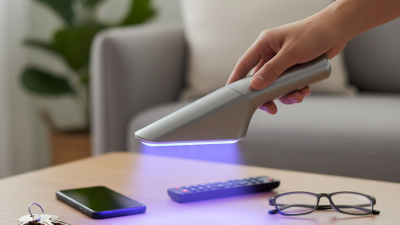
A UVC machine uses short-wave ultraviolet light to reduce microorganisms on exposed surfaces, in air, or inside flowing water. Most germicidal systems operate near 200–280 nanometers. The light disrupts microbial DNA or RNA, preventing normal reproduction. It does not usually remove dust, oils, or visible stains.
The key factor is UVC dose, which depends on light intensity and exposure time. A surface hidden behind a handle, fold, or shadow may receive little treatment. Line of sight matters. Air units require controlled airflow and sufficient contact time. Water systems need clear water, because suspended particles can block the light. In practical sourcing work, I would request measured output, chamber dimensions, treatment capacity, and maintenance instructions. Marketing claims alone are not enough.
Safety design deserves equal attention. Enclosed chambers, access switches, warning labels, and automatic shutoff features help prevent accidental exposure to skin and eyes. Some materials may also degrade after repeated UVC exposure. That detail is easy to overlook. I would check independent test reports, electrical documentation, replacement-part availability, and compliance requirements in the destination market. A machine can appear powerful yet perform poorly when lamps age or surfaces become dirty. Testing under real operating conditions is more convincing than relying on a brochure. Mistakes still happen, especially when users assume every area has received the same dose.
Why Choose a UVC Machine for Global Sourcing?
Which Global Sourcing Needs Can UVC Machines Address?
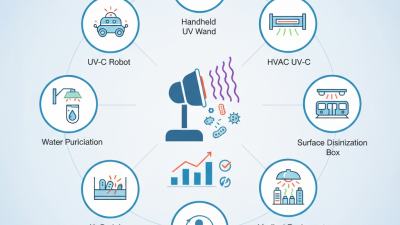
Global sourcing teams often need reliable disinfection equipment for air, water, and exposed surfaces. UVC machines can support hospitals, laboratories, food facilities, warehouses, and commercial buildings. Their main value is repeatable treatment without adding chemical residue. A suitable machine can also reduce labor for routine sanitation tasks. However, performance depends on dose, exposure time, distance, and surface cleanliness. UVC is not a magic shortcut.
Sourcing needs vary across countries. Buyers may require different voltages, plug types, chamber sizes, airflow rates, or installation methods. A dependable supplier should provide test reports, safety instructions, material details, and traceable quality records. Ask for measured UVC output, not only lamp wattage. Confirm shielding, door interlocks, warning labels, and maintenance access. UVC exposure can harm skin and eyes, so safe design must come before convenience. One mistake is trusting a catalog image too quickly. The machine may look suitable but fail during site testing.
Tips: Request a sample or factory video before bulk purchasing. Compare treatment data under realistic conditions. Check whether replacement lamps, sensors, and protective parts are available locally. Keep local electrical and workplace safety requirements in the evaluation. A lower price may reduce documentation, service support, or long-term reliability. That trade-off deserves a second look.
| Global Sourcing Need | How a UVC Machine Addresses It | Relevant Technical Dimension | Factual Data or Requirement | Sourcing Evaluation Point |
|---|---|---|---|---|
| Microbial reduction for water treatment | Treats water by exposing microorganisms to germicidal ultraviolet radiation without adding a chemical disinfectant. | UV dose | UV dose is expressed in mJ/cm² and is calculated from irradiance multiplied by exposure time. The required dose varies by organism, water quality, and target log reduction. | Request validated dose data at the intended flow rate, UV transmittance, and target reduction level. |
| Air disinfection in enclosed spaces | Supports air-treatment systems by inactivating airborne microorganisms as air passes through a controlled UVC chamber. | Airflow and exposure time | Performance depends on airflow rate, chamber volume, lamp output, air mixing, temperature, humidity, and the required UV dose. | Compare rated airflow with independently measured microbial reduction rather than lamp wattage alone. |
| Surface and equipment hygiene | Provides non-contact treatment for exposed surfaces, tools, packaging areas, and equipment that can be positioned within the irradiation zone. | Line-of-sight coverage | UVC effectiveness decreases on shaded, textured, dirty, or obstructed surfaces because radiation must reach the target area. | Check chamber geometry, reflective materials, rotating mechanisms, and cleaning procedures. |
| Chemical-free processing requirements | Can reduce reliance on added chemical disinfectants in suitable applications and does not normally leave a chemical residue on treated surfaces or water. | Process compatibility | UVC is a physical treatment; it does not provide a residual disinfectant in water or on surfaces after exposure. | Determine whether the application needs residual protection, pre-filtration, or a supplementary treatment step. |
| International electrical compatibility | A configurable power system can support deployment across markets with different electrical standards. | Input voltage, frequency, and protection | Common commercial electrical systems include 50 Hz and 60 Hz supplies and a range of regional voltage requirements. The machine must be specified for the destination market. | Confirm rated input, plug configuration, grounding, overcurrent protection, and power-supply documentation before ordering. |
| Worker and end-user safety | Enclosed chambers, interlocks, door sensors, shielding, and warning labels can limit exposure to germicidal UVC radiation. | UV leakage control | Direct exposure to germicidal UVC can injure eyes and skin. Open-air equipment requires engineered controls, operating procedures, and suitable personal protection. | Require safety testing, interlock verification, emergency stop functions, and documented operating instructions. |
| Validation for regulated or quality-sensitive operations | Provides measurable operating parameters that can be incorporated into a commissioning, qualification, and monitoring program. | Critical process parameters | Typical parameters include UV intensity or dose, exposure time, airflow or flow rate, lamp status, operating temperature, and maintenance intervals. | Ask for calibration methods, test reports, acceptance criteria, data logging, and service records. |
| Maintenance and replacement planning | Modular lamps, sleeves, filters, sensors, and control components can simplify service and spare-parts management. | Lamp aging and fouling | UVC output can decline with lamp age and contamination. Quartz sleeves, filters, and reflectors may require periodic inspection and cleaning. | Evaluate replacement intervals, spare-part availability, maintenance access, and total cost over the operating life. |
| Packaging and international logistics | A standardized machine design can be prepared for repeat shipments, installation, and after-sales support in multiple destinations. | Shipping configuration | Important variables include packed dimensions, gross weight, shock protection, lamp fragility, moisture protection, and installation requirements. | Request packing specifications, installation drawings, spare-part lists, and a clear delivery and acceptance checklist. |
| Selection of UVC wavelength | Allows the machine architecture to be matched to the application, while keeping safety and regulatory considerations in view. | Wavelength band | Conventional germicidal systems commonly use approximately 254 nm low-pressure mercury lamps, while 222 nm far-UVC systems require separate assessment of exposure limits, installation conditions, and applicable requirements. | Verify the actual spectral output, test method, exposure limits, and application-specific safety documentation. |
Note: UVC performance is application-specific. Actual microbial reduction depends on dose, organism, distance, exposure time, optical conditions, flow characteristics, surface condition, and equipment maintenance.
Why Choose a UVC Machine for Global Sourcing?
What Safety and Performance Standards Should Buyers Evaluate?
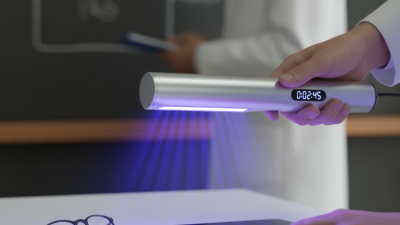
A reliable UVC machine should show more than a bright lamp and attractive output. Buyers need test records for wavelength, irradiance, exposure time, and delivered dose. Ask whether an independent laboratory verified these results under realistic operating conditions. A published wavelength near 254 nanometers does not prove effective performance. Lamp age, surface distance, dust, and shadows can reduce the actual dose.
Safety evidence deserves equal attention. Review photobiological risk assessments, electrical safety testing, electromagnetic compatibility results, and applicable regional conformity documents. Requirements may vary by machine design and destination market. Look for door interlocks, emergency stops, warning labels, shielded chambers, and automatic lamp shutoff. Ozone generation should also be measured when relevant. Small leakage matters.
Inspect the machine in person when possible. Check whether sensors respond quickly, cables are protected, and cleaning access creates exposure risks. Ask for calibration certificates with dates, methods, and traceable instruments. Performance claims should identify the tested organism, surface, distance, humidity, and contact time. Vague claims are a warning sign. I would not accept a certificate without matching model information. Even experienced buyers miss this detail. A polished datasheet can still hide inconsistent testing, weak maintenance procedures, or fragile components. Require spare-part information, software records, operator training, and clear instructions before placing a global order.
This chart uses the physical relationship dose = irradiance × exposure time. At a measured irradiance of 1.0 mW/cm², a UVC machine delivers 1.0 mJ/cm² per second. The results are illustrative calculations for buyer verification, not a universal disinfection target.
For global sourcing, request independent test evidence covering wavelength and irradiance, delivered dose and uniformity, lamp ageing, interlock and shielding performance, ozone emissions where applicable, and electrical safety. Relevant references may include ISO 15858 for UVC device safety information, IEC 62471 for photobiological safety assessment, and IEC 60335-2-65 for applicable household air-cleaning appliances.
The dashed reference represents the 254 nm, 8-hour occupational exposure limit of 6 mJ/cm² commonly cited in international UV exposure guidance. It is a personnel-safety limit, not a microbial inactivation requirement.
Comparing UVC machines requires more than checking price and lamp power. Buyers should verify wavelength, measured irradiance, exposure time, and treatment area. A supplier may advertise high output, but testing distance can change the result. Request independent test reports with clear methods, dates, and laboratory details. Ask whether measurements reflect a new lamp or normal operating conditions.
Safety deserves equal attention. Look for enclosed chambers, door interlocks, warning labels, emergency shutoffs, and leakage test results. UVC exposure can harm skin and eyes, even when the device appears inactive. Confirm that electrical ratings, manuals, and conformity documents match the destination market. Requirements differ across regions. Do not treat one certificate as universal approval.
Supplier reliability also appears in small details. Compare spare lamp availability, warranty terms, calibration support, packaging, and response times. Request a sample unit when possible. Measure its cycle time and inspect the user interface before placing a large order. A clean quotation is useful, but it does not prove consistent production. Factory audits may reveal weak traceability or unclear quality checks. This part is often underestimated.
Cost comparisons should include energy use, replacement parts, shipping protection, and technician training. A cheaper machine may create higher operating costs later. Buyers should record every assumption in a comparison sheet. It will not be perfect. Still, a transparent method helps separate measurable performance from persuasive sales language.
Why Choose a UVC Machine for Global Sourcing?
What Factors Determine the Total Value of a UVC Machine?
The total value of a UVC machine extends beyond its purchase price. Verified UVC output matters most because weak or uneven exposure can reduce treatment performance. Ask for independent test data, dose measurements, and clear operating conditions. A suitable machine should also include safety interlocks, shielding, and accessible maintenance procedures. These details protect operators and support reliable daily use.
Energy consumption, lamp life, replacement costs, and expected downtime shape long-term expenses. Shipping weight, installation requirements, local voltage, and technician training also affect the real budget. In practical evaluations, a cheaper unit can become expensive after frequent lamp changes or difficult servicing. That comparison is easy to miss. Digital monitoring may add cost, but it can improve traceability and help identify performance changes early. Specifications alone are not enough; actual workflow matters.
Tips: Request a total-cost estimate covering three to five years. Compare verified UVC dose, treatment capacity, power use, spare parts, warranty terms, and service response. Confirm that documentation supports the destination market’s safety requirements. Leave room for uncertainty, because maintenance conditions and usage patterns rarely match the sales estimate perfectly. A small pilot test can reveal loading problems, cleaning needs, and operator errors before large-scale sourcing.
This website uses cookies to ensure you get the best experience on our website. Learn More
ACCEPT