What Are the Best Smart UVC Devices in 2026?

Smart UVC devices promise more than a lamp that switches on. They may add occupancy sensors, app controls, cycle logs, and safety interlocks. Yet connected features do not prove that a device disinfects effectively. Buyers need to look beyond polished dashboards.

ASHRAE’s 2023 Standard 241 sets methods for assessing infection-risk mitigation, including equivalent clean airflow and germicidal ultraviolet technologies. It offers a useful engineering lens: performance depends on the space, placement, exposure, and operating conditions. The U.S. Department of Energy’s technical work on UV-C LEDs also highlights ongoing challenges around efficiency, cost, and device performance. These sources matter because “UV-C” describes a wavelength range, not a guaranteed result. Small print matters.

This guide compares the best smart UVC devices in 2026 by intended use, verified specifications, safety design, and ease of maintenance. A purifier for a bedroom is not automatically suitable for a clinic, shared office, or water system. Check whether the manufacturer provides test conditions, replacement-part details, and clear guidance on people and pets during operation. The U.S. FDA warns that some UV-C products can injure eyes or skin, so safeguards deserve careful attention. That distinction is easy to miss. Smart scheduling can help users follow a routine, but it cannot repair weak testing or poor placement. We will also flag claims that appear impressive yet lack enough public evidence. The honest answer may be that no single device fits every room.
What Are the Best Smart UVC Devices in 2026?

What Smart UVC Devices Are and How They Work

Smart UVC devices use ultraviolet-C energy to damage the genetic material of many microbes, limiting their ability to reproduce. They may use a lamp or UVC LEDs inside a closed cabinet, a room unit, or a handheld enclosure. “Smart” usually means built-in controls: timers, door sensors, occupancy detection, or an app that records cycles. The technology is not magic. Its performance depends on exposure time, distance, device design, and whether the target is directly illuminated.

A closed unit might pause when its door opens, while a room device may use a sensor to delay operation when people are present. These safeguards matter because direct UVC exposure can injure eyes and skin. Follow the device’s instructions, and never assume a status light proves effective disinfection. Dust, fingerprints, and shaded corners can reduce exposure; a phone resting beneath a case, for example, may not receive light on every surface. UVC also does not remove grime, so cleaning first is sensible. Results vary. That distinction is easy to miss when an app displays a simple “cycle complete” message.

The Main Types of Smart UVC Devices Available in 2026

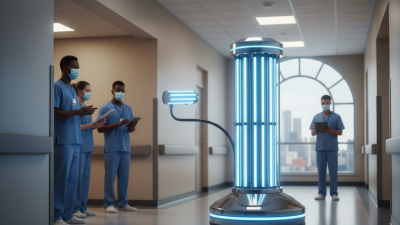
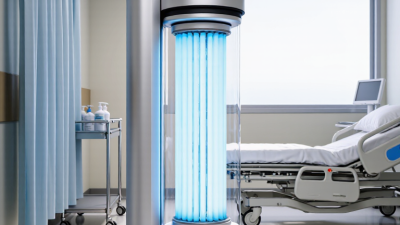
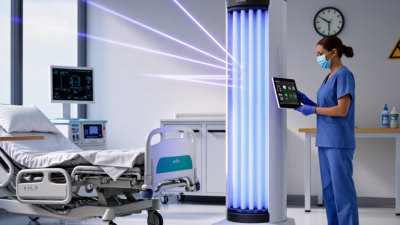
Smart UVC devices in 2026 generally fall into four groups. In-duct modules treat air inside HVAC systems, often switching on with fan operation. Upper-room fixtures disinfect air near the ceiling while people occupy the room below. Portable air cleaners combine UVC with filtration and may display particle readings. Mobile robots and enclosed cabinets target surfaces or objects; they need controlled cycles and reliable door or motion interlocks. Not every room needs automation.

The International Commission on Illumination defines UV-C as wavelengths from 100 to 280 nanometres; conventional germicidal lamps commonly use 254-nanometre radiation (CIE position statement; CDC/NIOSH technical guidance). Wavelength alone does not prove performance. ASHRAE Standard 241 (2023) frames infection-control measures using equivalent clean airflow, a useful basis for comparing room-air approaches. Buyers should check independent test conditions, airflow, lamp maintenance, and sensor limits. A particle sensor cannot confirm that pathogens have been inactivated. That distinction is easy to miss. Real rooms also have shadows, uneven airflow, and changing occupancy, so laboratory results may not transfer neatly. Even a well-designed device needs sensible placement and ongoing checks.

Essential Safety Features and Limitations of UVC Technology

In 2026, a smart UVC device should make safe operation clear, not merely offer remote control. Look for a fully enclosed chamber, a lid interlock, and automatic shutoff if the unit opens. These safeguards help prevent accidental exposure to ultraviolet-C light, which can injure eyes and skin. That matters. Motion sensors can add protection, but they should not replace a physical interlock.

Smart features are useful when they show cycle status, remaining time, and fault alerts. A clear indicator should tell you when a cycle has ended and when the chamber is safe to open. Avoid relying on an app notification alone; phones can be muted, delayed, or out of reach. Check whether the device records failed cycles, too. It is easy to overtrust a polished dashboard.

UVC also has limits. Light disinfects only areas it reaches, so shadows, dirt, and crowded objects can reduce effectiveness. Not everywhere. Follow the device’s instructions for spacing, exposure time, and compatible materials; repeated exposure may damage some plastics or fabrics. UVC is not a substitute for cleaning, ventilation, or hand hygiene. Some wavelengths can also generate ozone, so check product specifications and use only as directed. A smart device can support a careful routine, but it cannot guarantee that every surface is disinfected.

What Are the Best Smart UVC Devices in 2026?

UVC Wavelength References for Device Selection

Wavelength is only one factor when comparing UVC devices. Germicidal low-pressure mercury lamps commonly emit at 254 nm; UVC LEDs typically operate around 265–280 nm; and some far-UVC sources emit at 222 nm. The chart shows the upper boundary for wavelength ranges.

Smart controls such as occupancy sensors, timers, and door interlocks can help reduce accidental exposure, but they do not make direct UVC exposure safe. UVC can injure eyes and skin, and disinfection effectiveness depends on dose, distance, exposure time, and whether surfaces are shadowed. Follow the device instructions and use appropriate shielding.

Wavelength references: CIE ultraviolet wavelength bands and commonly used germicidal-source wavelengths.

How to Compare Smart UVC Devices for Different Needs

Compare smart UVC devices by the job they must do, not by app features. For a bedroom, check room volume, airflow, operating noise, and whether the unit can run safely around people. For a cabinet or unoccupied room, examine surface coverage, cycle time, and door-lock interlocks. A phone alert is useful, but it cannot prove that a surface received enough ultraviolet energy.

Look for the wavelength, measured irradiance, exposure time, and independent test method. These details help assess delivered dose; a glowing status ring does not. ASHRAE Standard 241-2023 uses equivalent clean airflow as a framework for controlling infectious aerosols, so compare air-treatment units using verified clean-air performance where available. Numbers matter. Check whether sensors detect actual lamp output or merely confirm that the device is switched on.

The MarketsandMarkets UV Disinfection Market report estimated a 5.3-billion-dollar global market in 2023, with growth projected to 9.3 billion dollars by 2028. That forecast signals wider adoption, not better performance. I would also compare filter replacement costs, lamp life, warranty terms, and clear safety instructions. One imperfect detail: published test conditions may not match a cluttered, lived-in room. Choose a device whose evidence and safeguards fit your real use, not an idealized test setup.

Top Smart UVC Device Categories to Consider in 2026

Smart UVC devices in 2026 fall into several practical categories. Air-cleaning units pass room air through a chamber where UVC light can treat airborne microbes. Their performance depends on airflow, exposure time, and maintenance, not just lamp power. Look for clear instructions on room size and replacement schedules. HVAC-integrated systems treat moving air inside ductwork, keeping the lamp away from everyday contact. They may suit larger homes, but installation and upkeep need careful planning. Enclosed surface cabinets use UVC inside a closed box to treat selected objects, such as small tools. They cannot disinfect areas the light does not reach. Shadows matter.

Smart features should make these devices easier to monitor, not imply guaranteed protection. Useful options include lamp-life alerts, run-time records, and controls that prevent operation when an enclosure opens. Some models offer occupancy sensing or remote scheduling; check how those safeguards actually work. UVC exposure can harm eyes and skin, so devices that shine directly into occupied rooms deserve particular caution. Follow the manufacturer’s safety and maintenance instructions, and do not rely on a UVC device as a substitute for cleaning or ventilation. The app may look polished. The evidence still matters. Also, real homes are messy, and ideal test conditions do not always match a crowded room.

What Are the Best Smart UVC Devices in 2026? – Top Smart UVC Device Categories to Consider in 2026
Device Category Typical UVC Approach Best-Fit Use Smart Features to Look For Key Selection Considerations Main Limitation
Enclosed Air-Cleaning Unit UVC lamps or LEDs treat air drawn through a closed chamber; some units combine UVC with particle filtration. Occupied rooms where treatment is intended to occur inside the device rather than by exposing people to UVC. Filter-life and lamp-status alerts, operating schedules, airflow settings, and clear fault notifications. Check the stated clean-air delivery or airflow performance, replacement-part requirements, and whether the UVC source is shielded during normal operation. Performance depends on airflow, exposure time, chamber design, and maintenance; UVC alone does not remove particles.
In-Duct HVAC UVC System UVC lamps are installed in an HVAC duct or near a coil; some systems treat moving air, while others target surfaces such as cooling coils. Central heating, ventilation, and air-conditioning systems with suitable installation space and controlled access. Remote lamp-status monitoring, runtime tracking, service reminders, and interlocks linked to access panels or system operation. Confirm compatibility with the air handler, safe installation, material compatibility, and appropriate sizing by a qualified HVAC professional. Results depend on lamp placement, air speed, UVC dose, and system design; a duct unit is not automatically a whole-building disinfection guarantee.
Upper-Room UVC Fixture Typically uses 254 nm UVC directed toward the upper part of a room, with air movement helping mix room air through the treated zone. Appropriately designed spaces with sufficient ceiling height, suitable air mixing, and professional installation. Occupancy-aware operating controls, status reporting, schedules, and monitoring of operating hours. Requires careful optical design, installation height, room-specific assessment, and verification that exposure in occupied areas is controlled. Effectiveness depends on room geometry and air mixing; incorrect aiming or installation can create an exposure hazard.
Enclosed Surface-Treatment Cabinet UVC lamps or LEDs operate inside a closed enclosure to treat exposed surfaces of compatible objects. Small objects or equipment that fit inside the chamber and can be positioned so target surfaces receive sufficient exposure. Door interlocks, cycle timers, cycle-complete alerts, and fault detection that prevents operation when the enclosure is open. Look for clear instructions on load size, positioning, cycle duration, and which materials are compatible with repeated UVC exposure. UVC is line-of-sight: shadows, covered areas, and complex shapes may receive little or no direct exposure.
Point-of-Use Water UVC Unit Water flows through a UV reactor, commonly using a UVC lamp; the delivered dose depends on flow, water clarity, and reactor design. Water treatment at a point of use or within a designed water system, when the unit is correctly sized for the application. Lamp-life and fault alarms, flow monitoring, service reminders, and automatic shutdown or alerts when operating conditions are outside limits. Check the rated flow and validated treatment conditions, and follow required pre-filtration and maintenance instructions. UVC does not remove dissolved chemicals or particles, and treatment performance can be reduced by poor water clarity or excessive flow.
Far-UVC Room Device Uses filtered far-UVC light, commonly around 222 nm, in a design intended to limit unwanted wavelengths. Specialized indoor applications where device design, installation, and exposure assessment receive careful review. Wavelength and filter-status monitoring, exposure-related operating controls, fault alerts, and transparent technical documentation. Review independent safety and performance evidence, applicable exposure limits, installation guidance, and maintenance requirements. “Far-UVC” does not mean risk-free; safety depends on wavelength, filtering, irradiance, exposure duration, and applicable standards.

Important: UVC performance depends on delivered dose, exposure time, distance, airflow or water flow, and unobstructed access to the target. Direct UVC exposure can injure eyes and skin. Choose devices with appropriate shielding, interlocks, installation guidance, and independently verifiable safety and performance information; smart connectivity does not by itself prove disinfection effectiveness.