


7 Best UV Light Disinfectants for Global Buyers?
Choosing a reliable uv light disinfect device requires more than comparing brightness, price, or shipping speed. Buyers need evidence about wavelength, irradiance, exposure time, coverage, safety controls, and independent testing. A compact cabinet may suit phones and tools, while an upper-room system may support occupied spaces under professional design. The wrong match can leave shaded surfaces untreated.
Market research shows strong commercial interest. Grand View Research estimated the global UV disinfection equipment market at approximately USD 3.1 billion in 2023, with continued growth expected through 2030. However, market growth is not proof of product performance. The World Health Organization warns that direct exposure to germicidal UV-C can injure skin and eyes. Safety must remain central.
Dr. David J. Brenner, director of Columbia University’s Center for Radiological Research, stated that “far-UVC light has the potential to be a safe and efficient tool against airborne disease transmission in public spaces.” His comment reflects promise, not a universal guarantee. Device design, dose control, ventilation, and maintenance still matter.
This guide compares seven UV light disinfect options for global buyers. It considers practical details, including sensor placement, timer accuracy, replacement parts, certification documents, and instructions that remain understandable after translation. Some products look impressive on a specification sheet. They may still perform poorly around curved or shadowed surfaces. That uncomfortable point deserves attention.
The recommendations are intended to support informed purchasing, not replace professional risk assessment. Buyers should verify current test reports and local safety requirements before installation. Reliable choices are rarely the flashiest ones.
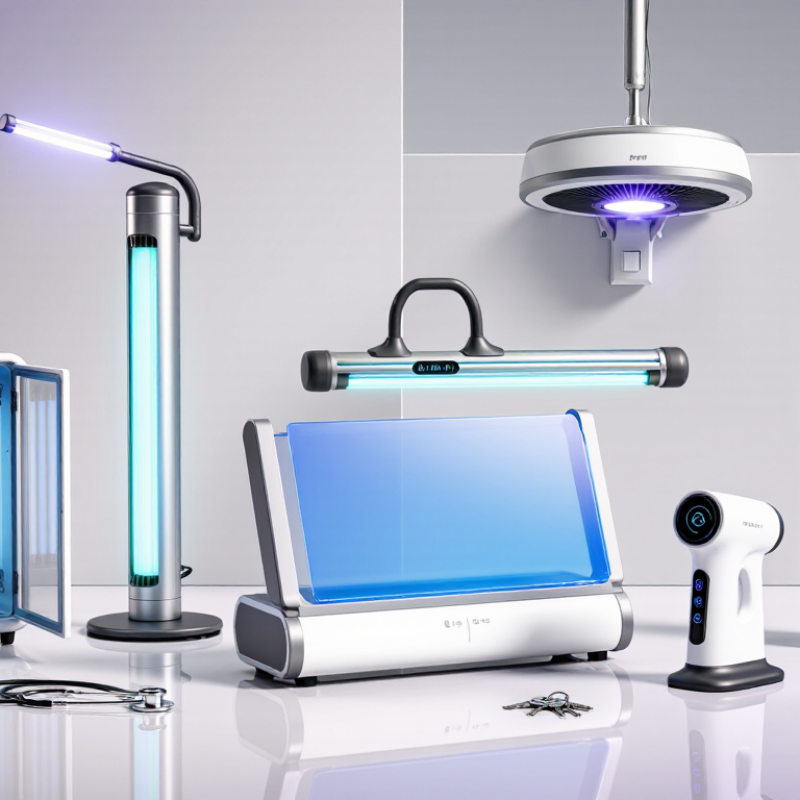
UV-C Fundamentals: 200–280 nm Wavelengths and Microbial Inactivation
UV-C disinfectants operate within the germicidal range of 200–280 nm. This energy can damage microbial DNA or RNA, preventing replication. Wavelength alone does not guarantee effective disinfection. Delivered dose matters more. Dose combines irradiance and exposure time.
Traditional low-pressure lamps often emit near 254 nm, while some newer systems use wavelengths closer to 265–280 nm. Performance varies with lamp quality, surface distance, airflow, and microorganism type. In practical evaluations, spores usually require more exposure than ordinary bacteria. Shadows remain a serious weakness. A covered corner may receive almost no UV-C.
Tips: Global buyers should request independent test data, measured irradiance, lamp-life information, and clear operating instructions. Check whether testing used the intended distance and exposure time. A certificate without test conditions tells too little. Avoid choosing equipment from wavelength claims alone.
UV-C can harm eyes and skin, so enclosed designs, interlocks, or occupancy controls are important. Never judge safety by appearance. I have seen users trust a bright lamp, although visible brightness does not measure germicidal output. Humidity and dust can also reduce real-world performance. Product selection should consider room size, target microbes, maintenance access, and local electrical requirements. Even careful buyers may overlook shadowing during installation. That deserves a second check.
7 Best UV Light Disinfectants for Global Buyers? - UV-C Fundamentals: 200–280 nm Wavelengths and Microbial Inactivation
| UV-C Solution Type | Typical Peak Wavelength | Representative Output or Dose Range | Strongest Applications | Microbial Action | Global-Buyer Advantages | Important Limitations |
|---|---|---|---|---|---|---|
| Low-pressure mercury UV-C lamp | 253.7 nm | Commonly engineered around 20–40 mJ/cm² for air and surface disinfection; the required dose depends on the organism and system design. | HVAC systems, water treatment, laboratories, healthcare rooms, and enclosed cabinets | Damages microbial DNA and RNA, preventing replication; generally effective against bacteria, viruses, and many molds when the delivered dose is adequate. | Mature technology, high electrical efficiency, strong published performance history, and broad international availability | Contains mercury; lamp output declines with operating hours; direct exposure can injure skin and eyes. |
| UV-C LED array | 260–280 nm, commonly 265–275 nm | System output varies widely; many compact products deliver approximately 1–20 mW/cm² at the target surface. | Portable devices, water-flow modules, air cleaners, robots, and compact equipment | Photochemical damage to nucleic acids; wavelengths near 265–270 nm are close to the peak absorption range of microbial DNA and RNA. | Mercury-free, instant start, digitally controllable, resistant to frequent switching, and easier to integrate into compact equipment | Higher initial cost, heat-management requirements, output variation between emitters, and potentially lower efficiency than mature mercury lamps. |
| 254 nm UV-C chamber or cabinet | 253.7–254 nm | A controlled enclosure may be designed for approximately 40–100 mJ/cm², depending on the validated cycle and target organisms. | Nonporous tools, packaging exteriors, small equipment, and laboratory items | Inactivates exposed bacteria and viruses; spores and shaded surfaces generally require higher doses or additional treatment. | Provides shielding, repeatable exposure geometry, door interlocks, and easier dose validation than open-room products | Cannot reliably disinfect shadows, hinges, textured materials, liquids, or areas blocked from direct line-of-sight. |
| In-duct UV-C air-treatment module | 253.7–280 nm | Performance is based on UV intensity, exposure time, airflow, and chamber geometry; a validated design should specify delivered fluence in mJ/cm². | Commercial buildings, schools, hospitals, transport systems, and industrial ventilation | Reduces airborne bacterial and viral viability during repeated air passes; effectiveness depends strongly on residence time and mixing. | Treats air without spraying chemicals and can operate continuously when installed inside sealed ductwork. | Does not disinfect every surface in a room; dust, lamp aging, airflow changes, and poor installation can reduce performance. |
| UV-C water-disinfection reactor | 254 nm or approximately 265–280 nm | Many drinking-water designs use a validated UV dose near 40 mJ/cm², although local regulations and target organisms may require different values. | Drinking water, process water, aquaculture, wastewater polishing, and point-of-use systems | Inactivates microorganisms without adding a disinfectant residual; it is effective only when sufficient UV reaches the water. | Fast treatment, no chemical taste or residue, compact footprint, and compatibility with continuous-flow operation | Turbidity, color, suspended solids, and fouling can shield microorganisms; UV does not remove chemicals or particles. |
| Pulsed xenon UV system | Broad-spectrum output, including approximately 200–280 nm | Uses short, high-intensity pulses; the supplier should provide measured fluence and validated cycle data rather than relying only on pulse count. | Room turnover, equipment surfaces, transport interiors, and high-touch areas | Combines germicidal UV exposure with intense pulsed light; microbial reduction depends on distance, reflectivity, shadowing, and pulse energy. | Rapid cycles and broad-spectrum output can support automated room or equipment treatment. | High equipment cost, line-of-sight dependence, possible material degradation, and strict occupancy controls during operation. |
| 222 nm filtered far-UVC system | Approximately 222 nm | Exposure limits and operating doses must follow applicable safety standards and product-specific validation; dose should be reported in mJ/cm². | Occupied-space air and surface research applications, subject to local safety approval | Strongly absorbed by proteins and nucleic acids; laboratory studies indicate microbial inactivation, but real-world performance depends on filtration and optical design. | Potential for use in occupied areas when correctly filtered, installed, monitored, and operated within applicable exposure limits. | Requires validated filtering, irradiance monitoring, regulatory review, and careful control of ozone and unwanted longer-wavelength emissions. |
Buyer note: UV-C performance should be compared using measured irradiance, exposure time, delivered fluence, wavelength spectrum, sensor calibration, and independent validation. UV-C is a line-of-sight technology and should not be treated as a substitute for cleaning, filtration, ventilation, or other required infection-control measures.
Related Posts
-
Top Benefits of Using a UVC Sterilizer for Home and Health?
-
Top 10 UVC Light Sterilizers for Global Buyers
-
10 Best UVC Sterilisers Which One Should You Buy?
-
How to Choose the Best UVC Machine for Global Sourcing?
-
7 Tips for Choosing Disinfecting Lights Safely
-
2026 Best UVC Sterilizer Products for a Healthier Home Guide?