


What Is the Best UVC Disinfection Robot from China?
Choosing the best UVC disinfection robot from China requires more than comparing prices, battery life, or marketing claims. A reliable evaluation must examine verified UVC output, coverage, navigation accuracy, safety controls, and after-sales support. The right uvc disinfection robot should work consistently in hospitals, laboratories, hotels, schools, and other controlled environments.
Real conditions matter.
A robot may perform well in an open test room but struggle around beds, curtains, chairs, and narrow doorways. Shadows can reduce ultraviolet exposure, even when the room looks fully illuminated. Operators should review independent test reports, measured UVC dose, cycle records, emergency shut-off functions, and human-presence sensors. Clear operating instructions are equally important. A powerful lamp is not enough.
Chinese manufacturers offer many capable designs, but product quality can vary between suppliers. Buyers should request factory information, technical documentation, warranty terms, software support, and evidence from comparable deployments. Speaking with facility managers can reveal practical details, such as charging reliability, wheel performance, cleaning requirements, and response times from service teams. Compliance with applicable safety and medical-device requirements must also be checked for the intended market.
Some conclusions remain uncertain.
A polished brochure may not reflect long-term field performance. Even independent testing has limits when room layouts differ. This guide therefore treats “best” as a practical decision, not a universal ranking. It considers measurable disinfection performance, operator safety, usability, maintenance, and total ownership cost. The strongest choice is the robot that delivers dependable results under real working conditions, with evidence that users can verify.
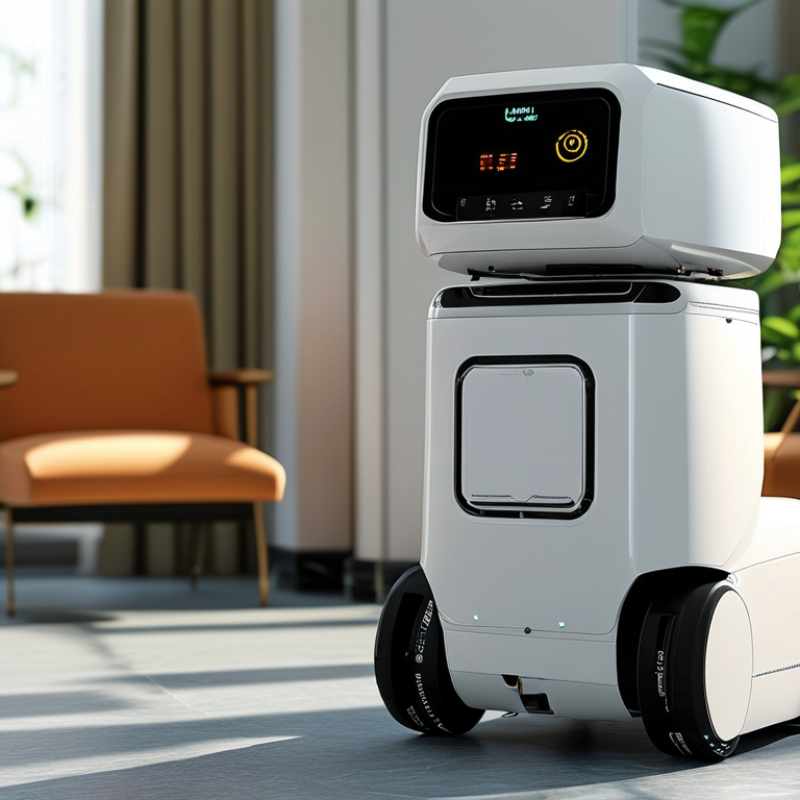
What Is a UVC Disinfection Robot and How Does It Work?
A UVC disinfection robot uses short-wave ultraviolet light to damage microbial DNA or RNA. Most systems operate near 254 nanometers, while newer lamps may use 222 nanometers. The robot moves through rooms, pauses near high-touch areas, and delivers a measured light dose. No chemicals are sprayed. No residue remains. However, UVC needs direct exposure. Shadows behind bed rails, equipment, or curtains can protect microorganisms.
The U.S. Centers for Disease Control and Prevention describes ultraviolet germicidal irradiation as a supplemental control measure, not a replacement for cleaning and ventilation. The International Ultraviolet Association also states that performance depends on dose, distance, exposure time, and lamp output. In practical tests, a reflective floor may appear clean, while the underside of a chair remains untreated. That is the uncomfortable detail.
A reliable Chinese-made UVC robot should provide irradiance readings, automatic shutdown, obstacle detection, and documented test methods. Buyers should request independent laboratory results, not only impressive reduction percentages. The 2022 CIE position statement warns that direct UVC exposure can injure eyes and skin, so occupancy sensors and warning controls matter. A robot claiming 99.99% reduction may still perform poorly in a crowded room. Operators should measure real surfaces, repeat validation, and record lamp aging. The best system is not simply the strongest one. It is the one that proves safe, repeatable coverage.
What Is the Best UVC Disinfection Robot from China? - What Is a UVC Disinfection Robot and How Does It Work?
| Evaluation Dimension | Typical Value or Range | Why It Matters |
|---|---|---|
| UVC wavelength | Around 254 nm for low-pressure mercury lamps; approximately 200–280 nm for germicidal UVC LEDs and lamps | Germicidal effectiveness depends on the emitted wavelength, optical design, exposure time, and delivered dose. |
| Disinfection mechanism | UVC damages microbial DNA or RNA and prevents effective replication | UVC is a physical treatment method and does not replace cleaning of visible dirt or organic material. |
| Typical coverage per cycle | Approximately 200–1,500 m², depending on room layout, speed, lamp output, and required dose | Coverage claims should be verified through a defined test protocol rather than floor area alone. |
| Typical operating time | About 2–6 hours per charge; charging commonly takes 3–6 hours | Runtime affects the number of rooms that can be treated during one shift. |
| Battery type | Rechargeable lithium-ion battery, commonly 24–48 V | Battery capacity, thermal management, and replacement availability influence operating cost and reliability. |
| Robot navigation | Manual remote control, autonomous route planning, or LiDAR-assisted navigation | Autonomous navigation can improve repeatability, but mapping accuracy is important in crowded or changing environments. |
| Obstacle detection | Laser sensors, depth cameras, ultrasonic sensors, bump sensors, or a combination | Multiple sensing methods help reduce collisions and improve operation around furniture and people. |
| Typical robot dimensions | Approximately 450–800 mm wide and 1,200–1,900 mm high with lamps raised | The size must be compatible with doorways, elevators, corridors, and storage areas. |
| UVC dose control | Controlled through lamp power, distance, exposure time, and route speed | A reliable system should document dose or validated exposure conditions, not only lamp wattage. |
| Safety protection | Motion sensors, emergency stop, remote monitoring, warning indicators, and automatic lamp shutdown | Direct exposure to germicidal UVC can injure skin and eyes, so occupied-room operation requires effective safeguards. |
| Treatment environment | Unoccupied rooms such as healthcare areas, classrooms, offices, laboratories, hotels, and transport interiors | UVC line-of-sight limitations make room geometry and the presence of shadows important. |
| Best performance indicator | Independent microbial-reduction testing under documented conditions | Results should state the test organism, initial contamination, exposure conditions, sampling method, and reduction level. |
| Key limitation | UVC is less effective on shaded, covered, or heavily soiled surfaces | Manual cleaning and repositioning of equipment may still be necessary for consistent whole-room treatment. |
Note: Values shown are typical industry ranges for comparison. Actual performance varies with lamp or LED design, room geometry, surface reflectivity, operating distance, exposure time, and validation method.
Related Posts
-
Top UV Robot Manufacturers for Global Buyers
-
2026 Best UVC Robot Disinfection Solutions for Global Buyers?
-

10 Best Infection Prevention Practices for a Healthier Future?
-
Top 10 Stainless Step Stool Options for Home and Kitchen Use?
-

Top 10 Infection Control Conferences to Attend in 2026?
-

2026 Top Innovations in Infection Prevention Strategies and Technologies?