Why Is Footwear Inspection Essential for Global Buyers?
Global footwear sourcing now spans factories, suppliers, and markets across several continents. That distance makes Footwear Inspection essential for global buyers. A product may look perfect in a digital sample, yet fail after repeated flexing, rain exposure, or long warehouse storage.
The World Footwear Yearbook 2024 reported that global footwear production reached approximately 22.4 billion pairs in 2023. Asia accounted for about 87% of total output. One weak production line can therefore affect thousands of pairs across multiple markets. The report also recorded a decline in global production, increasing pressure on buyers to control waste, returns, and avoidable costs. Small defects matter. A loose outsole. Uneven stitching. A sharp internal edge.
Inspection provides measurable evidence before shipment. It can verify materials, dimensions, color consistency, labeling, packaging, and basic performance requirements. SATRA’s technical resources emphasize structured testing for footwear durability, slip resistance, comfort, and material performance. These checks support purchasing decisions, but they cannot replace responsible factory management.
W. Edwards Deming, a leading quality-management expert, warned, “Quality comes not from inspection, but from the improvement of the production process.” His point remains uncomfortable and useful. Footwear Inspection should not become a final rescue operation. It should reveal process weaknesses early, while corrective action is still practical.
Still, inspection is not a magic shield. Sampling can miss isolated defects. Reports can be misunderstood. Buyers need competent inspectors, clear specifications, traceable evidence, and realistic acceptance criteria. When these elements work together, inspection becomes more than a pass-or-fail checkpoint. It becomes a reliable link between factory reality and global buyer confidence.
The Role of Footwear Inspection in Global Trade
Why Is Footwear Inspection Essential for Global Buyers?
The Role of Footwear Inspection in Global Trade
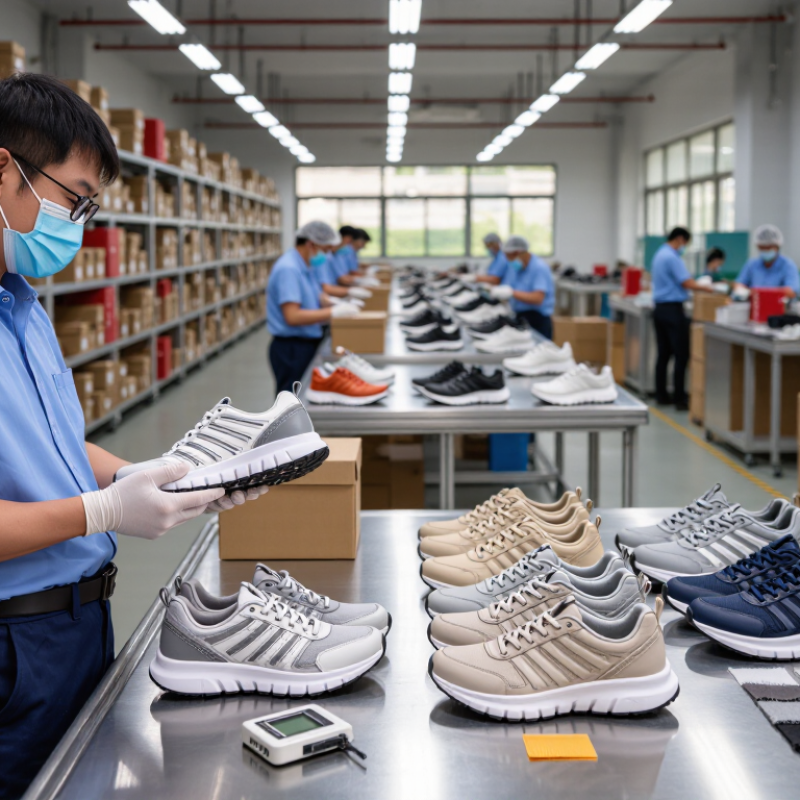
Footwear inspection connects factory output with the buyer’s real expectations. A product may look acceptable in photographs but fail during handling. Inspectors examine size, stitching, color, materials, labeling, and packaging. They also compare samples with approved specifications. A loose eyelet or uneven sole can become a costly complaint.
Trade involves distance, different languages, and varied production practices. Inspection creates reliable evidence before shipment leaves the factory. Inspectors use measurement tools, visual checklists, and random sampling methods. They may press soles, bend uppers, count cartons, and check moisture protection. These practical tests reveal defects that paperwork often misses. Small details matter.
Inspection reports also improve communication between buyers, suppliers, and logistics teams. Clear photographs and defect records support fair decisions. They can help buyers request corrections before products reach warehouses. However, inspection is not perfect. A limited sample cannot represent every pair. Inspectors can also miss hidden weaknesses. That limitation deserves honest discussion. Buyers should combine inspection with supplier evaluations, laboratory testing, and shipment monitoring. Reliable trade depends on several controls working together, not one report.
Key Quality and Safety Standards for International Footwear
Why Is Footwear Inspection Essential for Global Buyers?
International footwear buyers need more than attractive samples and competitive prices. They need measurable proof that each pair is safe, durable, and consistent. A reliable inspection checks size accuracy, stitching, bonding, material thickness, color stability, and outsole performance. Small defects matter. A loose eyelet can injure the wearer, while weak adhesive may separate during walking.
Safety requirements vary by product and destination market. Protective footwear may require testing under standards such as EN ISO 20345 or ASTM specifications. Test areas can include toe protection, slip resistance, impact performance, flexing, and water penetration. Ordinary footwear still needs chemical screening for restricted substances, especially in leather, rubber, dyes, and adhesives. Buyers should match the inspection plan with current destination regulations, not rely on one generic certificate.
Quality control works best at several stages. Inspectors can review incoming materials, monitor production, and perform final random checks before shipment. Measurements should be taken from multiple sizes, not only one sample. Carton labels, pair matching, and packing strength also deserve attention. A test report supports a decision, but it does not replace physical inspection. No checklist catches every weakness. Factory lighting, sampling limits, and human judgment can still affect results. That is why buyers should record defects with clear photographs, measurements, batch numbers, and corrective actions. Even experienced teams sometimes overlook a small heel gap. That mistake deserves review, not concealment.
Common Risks Detected During Footwear Quality Checks
Footwear inspection is essential because small defects can become expensive claims after shipment. The World Footwear Yearbook 2024 reported about 22.4 billion pairs produced globally in 2023. At this scale, inconsistent checks create serious commercial exposure. Global buyers should examine size accuracy, upper materials, stitching, bonding, outsole hardness, and color consistency. A shoe may look acceptable on a sample table, yet fail after repeated flexing.
Common risks appear in simple details. Uneven stitching can cause early tearing around eyelets. Weak adhesive may separate the outsole after moisture exposure. Poor size grading can leave one foot tighter than the other. Inspectors should also check surface stains, wrinkles, odor, mold signs, and color transfer. ISO 2859-1 sampling methods can support consistent acceptance decisions, but sampling is not a guarantee. One missed defect can still reach the customer. That uncomfortable point deserves attention.
Tips: Use a risk-based checklist before production ends. Measure several sizes, not only the reference pair. Perform flexing, peel, abrasion, and color-transfer tests where suitable. Photograph defects beside a ruler for clear evidence. Keep inspection records linked to carton numbers. Do not rely only on factory declarations. Inspectors can miss hidden damage when schedules become rushed, and buyers sometimes approve samples too quickly. That is a process weakness, not merely bad luck.
How Inspection Results Support Global Buyers’ Decisions
For global footwear buyers, inspection results turn factory claims into usable evidence. The World Footwear Yearbook 2024 reported 22.4 billion pairs produced worldwide in 2023, with Asia supplying about 87% of output. Such scale increases distance, variation, and decision risk. A buyer cannot judge every pair personally. Inspection data helps identify whether defects are isolated or systematic.
A practical report should record sample size, defect classification, measurements, material condition, outsole adhesion, color consistency, packaging, and carton accuracy. Results aligned with ISO 2859-1 sampling principles make acceptance decisions more consistent. For example, repeated sole separation is more serious than a small stitching mark. A failed critical check may justify shipment suspension, while minor defects can support controlled acceptance or rework. Keep the evidence clear.
Visual proof matters.
Photos of uneven seams, crushed boxes, or moisture marks help purchasing teams compare factories and batches. The International Trade Centre’s Trade Map data shows footwear moves through highly international supply chains, making correction after shipment expensive and slow. Inspection results therefore support supplier selection, price negotiation, corrective-action deadlines, and future order planning. They also reveal uncomfortable patterns. A factory may pass one lot and struggle with the next. Inspection is not magic. Sampling can miss hidden defects, and reports need experienced interpretation. Buyers should review trends, not celebrate one clean result.


