China Top Sanitary Napkin Making Machine Suppliers?
Choosing the right Sanitary Napkin Making Machine supplier requires more than comparing prices or factory photos. Production managers must examine output speed, product consistency, material compatibility, energy use, and after-sales support. A reliable supplier should explain each specification clearly, including machine width, automation level, sealing method, and permissible raw material range. These details affect absorbency, comfort, waste, and daily operating costs.
Real factory experience matters. Buyers should request machine videos, sample products, installation records, and references from comparable facilities. A serious manufacturer can discuss commissioning, operator training, spare parts, maintenance intervals, and troubleshooting procedures without avoiding difficult questions. Safety guards, emergency stops, electrical documentation, and quality-control processes also deserve careful review. Certifications may support credibility, but they should be checked against the actual machine and destination-market requirements.
No supplier is perfect. Some brochures promise impressive speeds that may not match stable production. This needs verification. A practical evaluation should compare tested performance, delivery schedules, warranty terms, and communication quality. It is also wise to inspect the supplier’s workshop, if possible, and observe how materials are handled. Small details reveal much: clean assembly areas, labeled components, protected wiring, and organized testing records. This guide introduces leading China-based suppliers and explains how to assess their technical strengths, commercial reliability, and long-term service capability. The final choice should fit the buyer’s product design, budget, workforce, and expansion plans. Cheap equipment can become expensive when support is weak. Conversely, the highest-priced option may not deliver the best value.
Types of Sanitary Napkin Making Machines in China
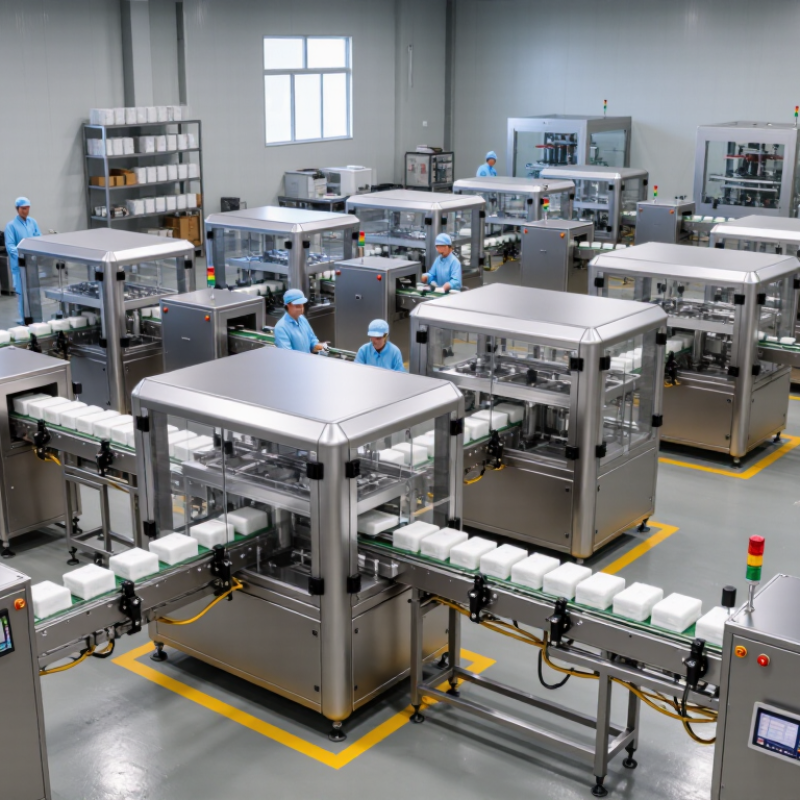
China’s sanitary napkin machinery market includes several line configurations, each suited to a different product design. A basic pad-making line forms an absorbent core from fluff pulp, tissue, and superabsorbent polymer. It usually includes crushing, dosing, forming, wrapping, and cutting units. Operators should inspect fiber distribution near the edges. Uneven density can create leakage complaints, even when laboratory absorption looks acceptable. Small details matter.
High-speed automatic lines add nonwoven topsheet feeding, backsheet lamination, release-paper placement, and individual packing. Some models use hot-melt adhesive systems for wings and elastic zones. Others support multiple pad lengths, thicknesses, and embossing patterns. A winged-pad line needs accurate folding and registration. A few millimeters of drift can make the wings sit unevenly. Servo drives improve control, but they do not replace regular calibration.
Specialized machines produce ultra-thin pads with airlaid cores or carefully metered SAP layers. Separate equipment may make panty liners, maternity pads, or sanitary towels with higher absorbency. For Chinese factories, machine selection should consider workshop space, operator skill, spare-part access, and cleaning routines. In my view, output speed is only one purchasing measure. Faster production can expose weak sealing or dust control. No machine is perfect. Trial runs with the intended materials remain essential, because imported and locally sourced webs may behave differently. A thoughtful supplier should provide training, test data, and clear maintenance records.
Key Factors for Evaluating Chinese Machine Suppliers
China Top Sanitary Napkin Making Machine Suppliers?
Key Factors for Evaluating Chinese Machine Suppliers
Choosing a Chinese sanitary napkin machine supplier requires more than comparing quotations. Start with documented manufacturing experience, not polished catalog images. Ask for installation records, recent customer references, and videos showing the machine under continuous production. A short demonstration can hide slow changeovers or unstable material feeding. Request measured data for speed, product dimensions, rejection rates, and actual operating efficiency.
Technical reliability matters on the factory floor. Review the machine layout, servo systems, tension control, sealing accuracy, and dust management. Check whether the line supports different sizes and absorbent structures without complicated adjustments. Ask how operators clean contact surfaces and replace wearing parts. Clear manuals, training plans, remote support, and local service coverage can prevent long production delays. Spare-part lists should include realistic delivery times, not vague promises.
Supplier evaluation should also include factory quality controls and acceptance procedures. Require sample testing with your own materials when possible. Confirm electrical specifications, safety guarding, documentation, and conformity with the destination market’s applicable requirements. A factory audit may reveal better evidence than a sales presentation. Still, audits are not perfect; one clean production day cannot prove long-term stability. Define factory acceptance tests and site acceptance tests in writing. Include response times, performance targets, warranty limits, and responsibilities for installation. Cheap equipment may become expensive when support is uncertain.
Leading Regions for Sanitary Napkin Machine Manufacturing
China Top Sanitary Napkin Making Machine Suppliers?
Leading Regions for Sanitary Napkin Machine Manufacturing
China’s sanitary napkin machinery base is concentrated in Guangdong, Zhejiang, Jiangsu, and Fujian. Guangdong benefits from mature automation supply chains and fast access to export ports. Zhejiang is known for converting equipment, precision parts, and flexible production lines. Jiangsu offers strong engineering capabilities, while Fujian supports lower-cost assembly and growing hygiene-product factories. Regional strength matters because a machine is never only a machine. Servo systems, sensors, packaging units, and maintenance support must work together.
Demand is expanding across Asia. Fortune Business Insights valued the global sanitary napkin market at about USD 24.13 billion in 2024 and projects it to reach USD 35.24 billion by 2032. Mordor Intelligence also identifies Asia-Pacific as a major growth area, driven by urbanisation, rising incomes, and improved menstrual-health awareness. These trends encourage Chinese manufacturers to develop faster lines, smaller footprints, and wider product compatibility. Some suppliers now design equipment for ultra-thin, overnight, winged, and individually wrapped products.
The map is not perfectly clean. Regional descriptions can hide major differences between factories. A coastal supplier may offer better export support, but not necessarily better engineering. Buyers should inspect trial-run records, material waste rates, changeover time, and after-sales response. A practical benchmark is stable output during an eight-hour test, not a brochure’s maximum speed. Reports provide useful direction, yet factory visits and production samples remain essential evidence. That part is easy to underestimate.
China Top Sanitary Napkin Making Machine Suppliers? - Leading Regions for Sanitary Napkin Machine Manufacturing
| Leading Manufacturing Region | Major Industrial Areas | Typical Machine Categories | Common Production Features | Key Supply-Chain Advantages | Important Buyer Checks |
| Guangdong | Foshan, Dongguan, Guangzhou and surrounding manufacturing areas | Sanitary napkin lines Panty liner machines Adult diaper equipment Packaging systems | Strong integration of mechanical processing, electrical control, servo systems, packaging and automation. Suitable for standard and customized converting lines. | Well-developed industrial infrastructure, access to major South China ports and a broad network of component suppliers. | Confirm the equipment layout, local electrical standards, spare-parts availability and the supplier’s experience with the required product dimensions. |
| Jiangsu | Suzhou, Changzhou, Nantong and other areas in the Yangtze River Delta | High-speed sanitary napkin lines Ultrasonic sealing units Inspection systems Automatic packing equipment | Known for precision machining, industrial automation and equipment integration. Production lines can be configured for wings, multiple absorbent cores and different folding formats. | Dense engineering ecosystem, convenient access to precision components and efficient logistics within the Yangtze River Delta. | Request verified output data under the selected product specification rather than relying only on the machine’s theoretical speed. |
| Zhejiang | Ningbo, Wenzhou, Taizhou and nearby industrial centers | Sanitary napkin machines Laminating units Cutting and folding equipment Bagging machines | Broad manufacturing base for converting machinery, packaging equipment and auxiliary systems. Often suitable for flexible configurations and mid-volume production. | Strong private manufacturing sector, established export channels and access to Ningbo-Zhoushan Port and other regional logistics facilities. | Check the control-system documentation, tension-control performance, changeover time and compatibility with locally available raw materials. |
| Fujian | Quanzhou, Xiamen and surrounding coastal manufacturing areas | Personal-care converting lines Sanitary napkin equipment Diaper machinery Secondary packaging | Experience with absorbent-hygiene machinery and related nonwoven, film, pulp and packaging processes. Lines may be designed for regional and export markets. | Established hygiene-product manufacturing base, skilled technical labor and convenient coastal shipping connections. | Evaluate forming accuracy, absorbent-core consistency, dust-control measures and the availability of commissioning support after shipment. |
| Shanghai and the Yangtze River Delta | Shanghai, Kunshan, Jiaxing and nearby integrated industrial areas | Automation modules Vision inspection Servo control systems Packaging integration | Particularly suitable for advanced automation, quality inspection, control integration and engineering support for complete production lines. | Excellent access to international logistics, engineering services, testing resources and specialized industrial suppliers. | Clarify software ownership, remote-support arrangements, data connectivity, training scope and the replacement procedure for electronic components. |
Practical comparison note: Actual production capacity depends on product size, absorbent-core structure, raw-material quality, number of lanes, operating shifts, changeover frequency and the final inspection standard. Before purchasing, request a complete technical specification, factory acceptance test, sample-production report, utility requirements, installation plan and after-sales service schedule.
How to Compare Machine Features, Costs, and Production Capacity
When comparing China’s top sanitary napkin making machine suppliers, examine the complete production line, not only the quoted price. Check forming accuracy, absorbent core control, sealing quality, and material waste. A practical trial should show stable output across thin and thick napkin designs. Ask for samples made with your intended pulp, nonwoven fabric, and packaging film. Small material changes can expose weak tension control.
Cost comparison requires more than the purchase invoice. Include molds, spare parts, installation, operator training, electricity, and shipping. Request a written capacity figure with product size, layers, and acceptable defect rates clearly stated. A machine rated at 800 pieces per minute may deliver less during real production. That gap matters. Review maintenance access, sensor reliability, changeover time, and technical response records. I would also inspect a running installation when possible, although one visit cannot prove long-term reliability.
Tips: Build a simple comparison sheet. Record speed, usable output, waste percentage, energy demand, warranty coverage, and delivery time. Use the same assumptions for every supplier. Ask how capacity was measured. If a quote looks unusually low, question what is missing. My own comparison would reserve money for unexpected adjustments, because early estimates are rarely perfect. A cheaper machine can become expensive when downtime, rejected products, or slow format changes are ignored.
Steps for Selecting and Purchasing from a Chinese Supplier
China Top Sanitary Napkin Making Machine Suppliers?
Selecting a Chinese sanitary napkin making machine supplier requires more than comparing prices. Define your product size, absorbent core, speed target, and required automation level. Ask for a complete technical proposal with machine dimensions, power consumption, output range, and material specifications. A reliable supplier should explain these details clearly, not hide them behind impressive production numbers.
Request samples made with your materials. Check absorbency, sealing quality, cutting accuracy, and visible waste. Visit the factory if possible, or arrange a live video inspection of the assembly line. Review quality-control records, operator training, spare-parts availability, and after-sales response times. Confirm whether installation, testing, and training are included in the quotation. Small omissions can become expensive later.
Tips: Compare at least three suppliers using the same checklist. Verify company registration, export experience, references, and machine documentation. Ask for a written acceptance standard before placing an order. Include delivery terms, warranty coverage, payment stages, and penalties for missed specifications. Do not approve a machine from showroom performance alone. Real production can be less stable. A short trial run is useful, but it may not reveal long-term maintenance problems. Leave room for honest review before signing.


