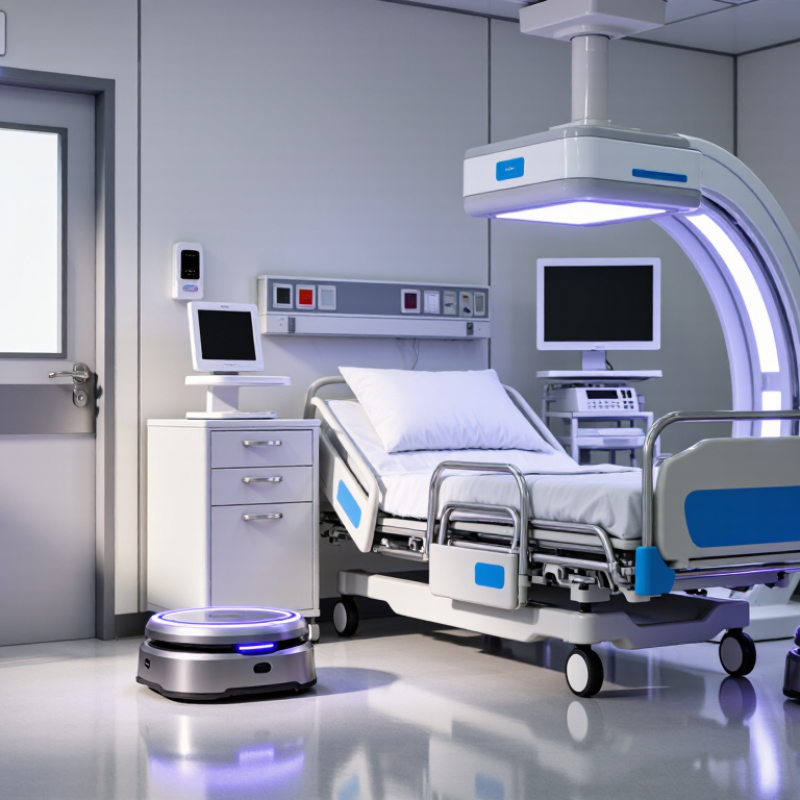
Choosing among the 10 Best Hospital UV Light Disinfection Systems requires more than comparing lamp power or marketing claims. Hospital leaders need to examine real clinical workflows, room size, surface coverage, cycle time, sensor accuracy, and maintenance demands. In a patient room, a bedrail may receive strong ultraviolet energy while the underside remains shaded. Small details matter.
Hospital uv light disinfection can reduce microbial contamination after routine cleaning. It cannot remove blood, dust, or organic residue. As infection-prevention expert William A. Rutala has emphasized, “No-touch disinfection technologies are an adjunct to, not a replacement for, manual cleaning.” That principle guides this review.
Safety comes first.
The strongest systems include occupancy sensors, door interlocks, warning indicators, and documented dose monitoring. They should also provide clear records for infection-control teams. Independent testing is more valuable than impressive brochures. Look for evidence involving healthcare environments, not only laboratory chambers.
This comparison considers ultraviolet-C wavelength, robot or portable design, coverage patterns, battery performance, operator training, and service support. It also weighs usability during busy turnover periods. A system that disinfects effectively but delays admissions may create operational pressure.
There is no perfect ranking. Room geometry, budget, staffing, and local protocols change the answer. Some products appear advanced but offer limited transparency. Others seem simple and perform reliably. That is worth remembering.
The following guide evaluates ten leading options with practical caution. It highlights their strengths, limitations, ideal applications, and questions buyers should ask before deployment. Every selection should support a broader infection-prevention program, validated cleaning practices, and ongoing performance checks.
Hospital UV light disinfection systems use ultraviolet-C energy to reduce microorganisms on exposed surfaces and in the air. UV-C damages microbial genetic material, limiting replication. A typical system includes UV-C lamps, a control panel, motion sensors, and safety interlocks. Some units are mobile, while others are installed in ventilation systems or upper-room spaces.
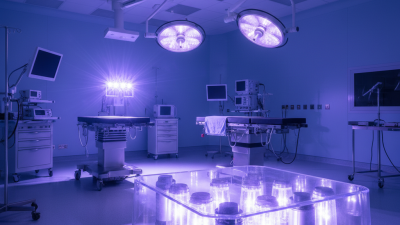
Hospitals often use these systems after routine cleaning in operating rooms, patient rooms, isolation areas, and procedure spaces. They work best when surfaces are already free from visible dirt. Distance, exposure time, lamp output, and shadowed areas strongly affect performance. A bed rail facing the lamp may receive adequate exposure, while contamination beneath equipment may remain untouched. Staff should follow measured protocols, not visual assumptions.
Safety matters. Direct UV-C exposure can injure eyes and skin, so occupied-room use requires suitable shielding and professional controls. Qualified teams should check irradiance, lamp condition, room layout, and maintenance records. Independent testing can support reliable claims. UV systems are useful, but they are not magic. Their results can decline when lamps age or furniture blocks the light. That weakness deserves honest attention when hospitals compare the ten best systems.
How UV Disinfection Works in Healthcare Environments
10 Best Hospital UV Light Disinfection Systems? How UV Disinfection Works in Healthcare Environments
UV disinfection uses ultraviolet-C energy, commonly between 200 and 280 nanometres, to damage microbial DNA and RNA. This prevents organisms from replicating. In hospitals, systems may treat upper-room air, ventilation ducts, or surfaces after manual cleaning. They do not replace cleaning. They add another barrier.
The need is substantial. The WHO Global Report on Infection Prevention and Control (2022) estimates that 7 in 100 acute-care patients in high-income countries acquire at least one healthcare-associated infection. That figure rises to 15 in 100 in low- and middle-income countries. The CDC’s environmental infection-control guidance describes UV germicidal irradiation as supplemental protection, not a standalone solution. That distinction matters.
Performance depends on dose, exposure time, lamp condition, and room geometry. Dust, organic residue, shadows, and blocked airflow can reduce effectiveness. A clean lamp matters. So does correct placement. Healthcare teams should verify irradiance with calibrated meters and follow maintenance records. Automated room devices also require occupancy controls, warning systems, and documented procedures. Direct exposure can injure skin and eyes, so safety engineering cannot be optional.
Evidence is not perfectly uniform. Some studies show strong reductions in airborne or surface contamination, while real-world outcomes vary between wards. That uncertainty deserves honesty. A system that looks powerful on paper may underperform beside curtains, equipment, or an unclean bedrail. The best selection process combines infection-control expertise, engineering assessment, independent testing, and site-specific validation.
Key Features of the 10 Best Hospital UV Systems
Hospital UV systems differ in design, dose delivery, and clinical use. The ten strongest options usually include mobile UV-C robots, fixed ceiling units, upper-room fixtures, HVAC modules, and air-sanitizing units. They may also include water treatment systems, enclosed instrument cabinets, pass-through chambers, portable air devices, and UV-C LED platforms.
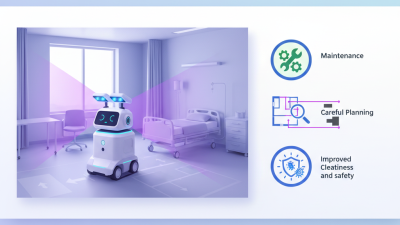
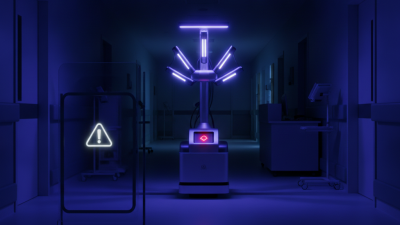
Key features separate dependable systems from attractive equipment. A mobile robot should map room size, calculate exposure time, and record completed cycles.
Fixed units need occupancy sensors, door interlocks, and clear status indicators. Upper-room systems require controlled airflow and careful installation height.
HVAC modules should provide stable irradiation without restricting ventilation. Water units need flow-rate monitoring and automatic shutdown protection.
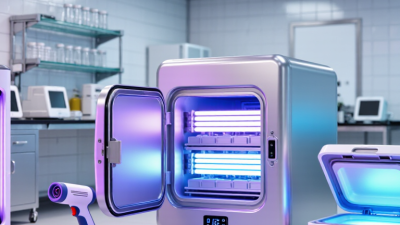
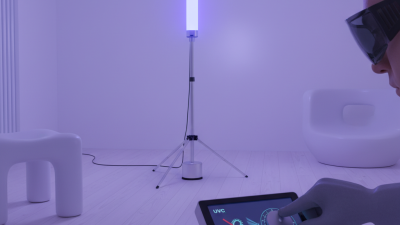
Enclosed cabinets should verify door closure before activation. Portable air devices benefit from sealed filters, low noise, and replaceable components. UV-C LED systems offer efficient control, but their real dose still needs validation.
Dose monitoring matters more than a bright lamp. Shadows remain. Bed rails, curtains, and equipment can block ultraviolet energy, so staff must position devices carefully and combine cleaning methods. In clinical evaluations, reliable logs, calibration records, and preventive maintenance often reveal more than marketing claims. Safety training should explain skin and eye hazards in plain language. No system treats every surface equally. That limitation deserves honest attention, especially when rushed schedules encourage incomplete cycles. Testing should use room-specific measurements, not assumptions from a brochure.
Safety Standards and Clinical Implementation Considerations
Selecting one of the 10 best hospital UV light disinfection systems requires more than comparing lamp output. Clinical safety comes first. UV-C can injure eyes and skin within minutes, even when a room appears empty. Systems should include door interlocks, occupancy sensors, warning indicators, emergency shutoffs, and clear operating instructions. Their photobiological risks should be assessed against standards such as IEC 62471 and relevant national requirements.
Clinical teams should map room size, airflow, surface shadowing, and patient traffic before installation. A mobile unit may disinfect exposed surfaces, but beds, rails, equipment wheels, and cabinet edges can remain untreated. Dose measurements, maintenance records, and routine performance checks help confirm that the delivered exposure matches the intended design. Trained staff should verify room clearance and place signage before every automated cycle. Small errors matter.
UV should support, not replace, manual cleaning and ventilation. Infection prevention specialists, facilities engineers, occupational health staff, and clinical users should approve the workflow together. Validation should include realistic room conditions, not only laboratory demonstrations. A polished checklist can still miss a reflected beam or a poorly positioned sensor. That weakness deserves review. Hospitals should also reassess the system after renovations, equipment changes, or altered patient pathways. Reliable implementation depends on documented training, incident reporting, and honest evaluation of failures.
10 Best Hospital UV Light Disinfection Systems? Safety Standards and Clinical Implementation Considerations
There is no universally “best” hospital UV system. Selection should be based on wavelength, validated dose delivery, room geometry, interlocks, human exposure controls, environmental conditions, and compliance with applicable occupational-safety requirements.
The chart compares commonly cited nominal emission wavelengths. Low-pressure mercury lamps typically emit at 254 nm, UV-C LEDs commonly operate near 265–280 nm, and filtered krypton-chloride excimer systems emit near 222 nm. Wavelength alone does not establish disinfection performance; delivered fluence, irradiance, shadowing, surface reflectivity, airborne loading, and microorganism susceptibility must also be validated.
Safety controls
Use access interlocks, occupancy sensors, warning indicators, emergency shutoff controls, and documented lockout procedures. UV-C exposure limits should be assessed using the applicable photobiological safety standard and occupational exposure guidance.
Clinical implementation
Define the target use case—air, surface, water, or equipment—and verify the delivered dose at the least-exposed locations. Cleaning, room preparation, cycle documentation, and maintenance remain essential.
Reference framework
Relevant evaluation frameworks include IEC 62471 for photobiological safety, ISO 15858 for UV-C safety information, and healthcare infection-control guidance from public-health authorities.
How to Compare and Select the Right UV Disinfection System
Selecting among the 10 best hospital UV light disinfection systems requires more than comparing lamp power. Start with the clinical setting. A patient room, operating theatre, ventilation duct, and water system need different designs. Define the target organisms, room volume, airflow, surface coverage, and operating schedule. UV-C works only where sufficient light reaches the target. Shadows, dust, curtains, and equipment can reduce performance.
Ask suppliers for independent test data, measured UV dose, irradiance maps, and maintenance requirements. Look for calibrated sensors, fault alarms, door interlocks, and clear safety controls. These features matter when staff work under pressure. Confirm whether the system records cycles, lamp hours, faults, and cleaning status. Hospital engineering teams should also inspect replacement procedures and confirm local electrical and occupational safety requirements.
A practical trial can reveal problems that brochures miss. Place the unit in a representative room, measure exposure points, and observe staff movement. Check how long a complete cycle takes. A device may perform well in an empty room but poorly around beds and mobile equipment. I have seen selection decisions focus too heavily on wattage. That can be misleading. Higher power does not automatically mean better disinfection. Reassess results after installation, because airflow changes, room layouts, and maintenance habits can affect real performance. Record every limitation honestly.