How to Choose a Reliable Dog Food Supplier?

Choosing a reliable Dog Food supplier starts with more than comparing prices or reading attractive packaging. It requires evidence, careful questions, and a willingness to inspect ordinary details. A trustworthy supplier should explain where ingredients come from, how batches are tested, and how products are traced after delivery. Ask for clear nutritional information, manufacturing standards, quality-control procedures, and recent laboratory documentation. If answers remain vague, pause.

Veterinary nutritionist Dr. Lisa M. Freeman states, “There is no one best diet for all pets.” Her point matters when evaluating suppliers. A responsible company should support different nutritional needs, not promote one formula as perfect for every dog. Look for transparent feeding guidance, qualified nutrition professionals, consistent production, and a documented recall process. A useful test is practical: request the lot number, production date, storage instructions, and contact details before placing a large order. Reliable suppliers respond with specific information, not polished promises.

Walk through the supply chain mentally. A damaged carton, an unusual smell, or inconsistent kibble size may reveal weak handling. Yet appearance alone proves little. No checklist is perfect. Even experienced buyers can overlook small warning signs when deadlines are tight. That is why supplier reviews should combine records, product samples, facility information, and ongoing communication. This guide will examine those points closely, helping retailers, breeders, and pet owners choose a Dog Food partner with stronger evidence, safer habits, and greater accountability. Reliability is built gradually. It should never depend on trust alone.
How to Choose a Reliable Dog Food Supplier?

Define Your Dog Food Supply Requirements

Before choosing a reliable dog food supplier, define exactly what your dogs need. Record their age, breed size, activity level, allergies, and medical concerns. Puppies may need different nutrient levels than senior dogs. Dogs with sensitive digestion may require simpler recipes. Include your expected monthly volume, preferred packaging, delivery schedule, and storage space. Be specific.

Ask whether the supplier can provide complete ingredient lists, nutritional analysis, batch numbers, and production dates. A qualified veterinary nutritionist should review diets for special health needs. Request laboratory testing for nutrient accuracy and harmful contamination. Check how the supplier handles recalls, damaged cartons, and temperature-sensitive deliveries. Clear answers matter.

Keep records of every shipment. Compare labels with the approved product specification. Watch for changes in smell, color, texture, or packaging. One detail is easy to miss. Confirm that the supplier can maintain the same formula across future batches. Minimum order quantities may also affect freshness and cash flow. I would not rely on attractive prices alone. A cheap shipment that arrives late can disrupt feeding routines and increase waste. The requirement list may still be incomplete, so review it with a veterinarian and update it when your dogs’ needs change.

Verify the Supplier’s Credentials and Compliance

A reliable dog food supplier should prove compliance before discussing price or packaging. This matters in a large, tightly scrutinized market. The 2024 APPA National Pet Owners Survey reports that 82 million U.S. households owned a pet in 2023–2024. FEDIAF’s 2024 Facts and Figures report estimates that 139 million European households owned pets. More volume means more room for traceability failures. Ask for legal business registration, food-facility registration where required, and current HACCP or ISO 22000 certification. Verify certificate numbers directly with issuing bodies.

Do not confuse registration with approval. In the United States, FDA facility registration supports oversight, but it does not certify product safety or quality. Review the supplier’s manufacturing license, audit history, product specifications, and certificate of analysis for each lot. Check whether labels follow applicable federal and state rules. AAFCO guidance can help, yet it is not itself federal law. Request records for ingredient origin, allergen controls, pathogen testing, complaint handling, and recall drills. Missing documents are evidence.

A practical audit should include a video or on-site visit. Look for sealed ingredient bins, calibrated scales, clean loading areas, and dated retain samples. Ask how the supplier handles a failed test. The answer should include isolation, investigation, notification, and documented corrective action. A certificate alone can mislead. I would also compare documents against recent invoices and batch codes. Paperwork sometimes looks perfect while operations lag behind. That uncomfortable check often reveals more than a polished sales presentation.

How to Choose a Reliable Dog Food Supplier?

Verify the Supplier’s Credentials and Compliance

This checklist is based on commonly recognized pet-food compliance controls, including facility registration, good manufacturing practices, hazard analysis, product testing, labeling review, and lot traceability. Request documented evidence for every applicable item before approving a supplier. A missing document should be treated as “not verified,” not as proof of non-compliance.

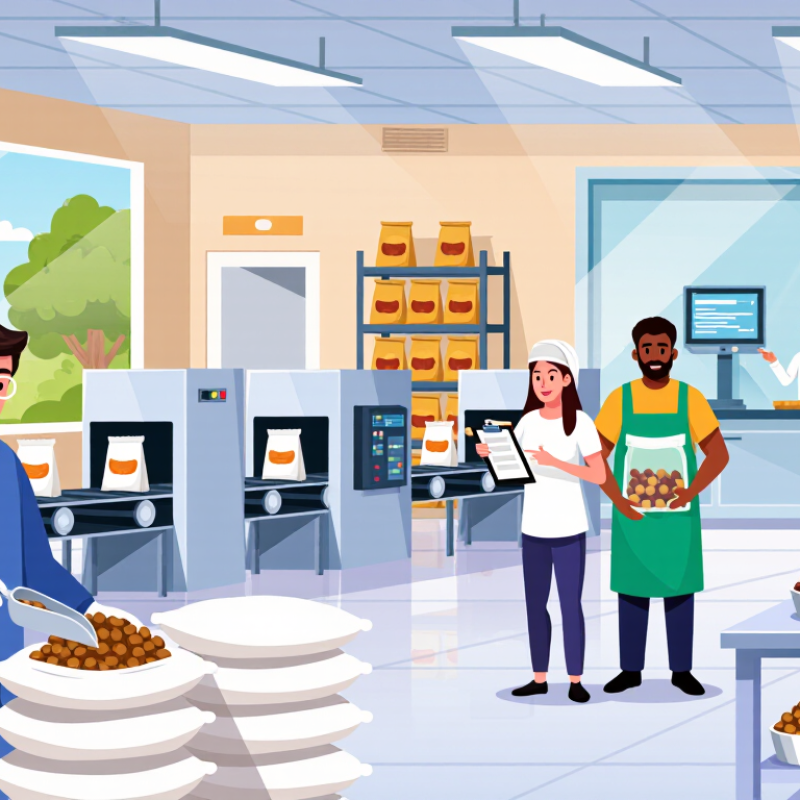
Evaluate Ingredients, Formulas, and Manufacturing Standards

How to Choose a Reliable Dog Food Supplier?

A reliable supplier should explain every ingredient, not hide behind attractive packaging. Check the ingredient list, guaranteed analysis, calorie content, and feeding instructions. Meat sources should be clearly identified, such as chicken meal or lamb, rather than vague terms like “animal derivatives.” AAFCO’s 2024 Official Publication provides nutrient profiles used to assess complete and balanced dog diets. However, compliance does not automatically prove superior quality. FEDIAF’s 2024 Facts and Figures report identifies 139 million European households with pets, showing the scale of this industry and the need for consistent controls.

Formula design also deserves careful questioning. Ask whether nutritionists formulate the recipe and whether each batch receives laboratory testing. Look for testing of moisture, protein, fat, minerals, pathogens, and mycotoxins. Manufacturing facilities should follow documented sanitation procedures, traceable batch coding, and controlled storage temperatures. FDA guidance emphasizes preventive controls and hazard-based food safety systems. A supplier that cannot show these records creates unnecessary risk. No formula is perfect. I would treat vague answers as a warning, even when the product looks premium.

Tips: Request a recent certificate of analysis for several batches. Compare the declared nutrients with laboratory results. Ask how recipe changes are approved and recorded. Visit the facility if possible. A polished website is not evidence. Also check complaint handling; honest suppliers can explain mistakes, delays, and corrective actions without defensiveness.

How to Choose a Reliable Dog Food Supplier? - Evaluate Ingredients, Formulas, and Manufacturing Standards

Evaluation Dimension Recommended Benchmark Evidence to Request Warning Signs Suggested Weight
Nutritional adequacy The formula should be complete and balanced for a clearly stated life stage, size, or physiological condition. Nutritional adequacy statement, product specification, and laboratory analysis. No life-stage designation, incomplete nutrient declaration, or vague claims such as “premium nutrition” without supporting details. 15%
Protein sources Animal or plant protein sources should be identified by specific ingredient names and supported by a complete amino-acid profile where relevant. Ingredient specification, protein digestibility data, and amino-acid analysis. Unspecified “meat derivatives,” excessive reliance on protein concentrates, or inconsistent ingredient descriptions. 10%
Ingredient transparency The supplier should disclose ingredient names, functional roles, country of origin where required, and the use of preservatives or additives. Current ingredient list, technical data sheets, allergen statement, and additive declaration. Proprietary blends that hide quantities, unclear additives, or refusal to provide technical documentation. 10%
Guaranteed analysis The label should provide crude protein, crude fat, crude fiber, moisture, and other legally required nutrients for the target market. Label artwork, certificate of analysis, and independent laboratory test results. Missing moisture data, inconsistent values between label and test report, or unsupported nutrient claims. 8%
Calorie and feeding guidance The supplier should provide metabolizable energy information and feeding instructions based on body weight, activity, and life stage. Energy calculation or test method, feeding guide, and adjustment recommendations. Only generic serving sizes, no calorie information, or feeding directions unsuitable for puppies or senior dogs. 6%
Formula consistency Critical ingredients, nutrient targets, product specifications, and tolerances should be controlled across production batches. Approved formula, change-control procedure, batch comparison reports, and retention-sample policy. Frequent unexplained formula changes, unstable product color or texture, and no documented change notification process. 10%
Food safety system A documented hazard-based food safety program should identify biological, chemical, and physical hazards and define control measures. HACCP plan, prerequisite programs, sanitation procedures, and corrective-action records. No formal hazard assessment, incomplete sanitation records, or corrective actions without documented closure. 12%
Manufacturing controls The facility should operate with documented good manufacturing practices, controlled hygiene, calibrated equipment, and validated processing parameters. GMP documentation, process-flow diagram, equipment calibration records, and internal audit reports. Poor zoning, uncontrolled personnel movement, expired calibration records, or inadequate pest-control documentation. 10%
Microbiological and contaminant testing Risk-based testing should cover relevant pathogens, toxins, heavy metals, mycotoxins, and other contaminants appropriate to the ingredients and process. Recent certificates of analysis, sampling plan, laboratory accreditation details, and test methods. Only visual inspection, no defined sampling frequency, or test reports that do not identify batch numbers. 10%
Traceability and recall readiness Each batch should be traceable from incoming ingredients through production, packaging, distribution, and finished-goods release. Mock-recall results, lot-coding procedure, supplier records, and distribution traceability report. Unreadable lot codes, missing distribution records, or inability to complete a mock recall promptly. 8%
Regulatory and labeling compliance Labels and claims should comply with the destination market’s pet-food regulations, including ingredient naming, net quantity, feeding directions, and required contact information. Regulatory review checklist, approved label files, market-specific compliance statement, and claim substantiation. Medical claims without evidence, incorrect ingredient order, missing lot information, or labels not adapted to the destination market. 7%
Supplier reliability and service The supplier should demonstrate stable lead times, transparent minimum order quantities, documented complaint handling, and clear communication about disruptions. Service-level agreement, delivery-performance records, complaint procedure, and business-continuity plan. Unclear lead times, repeated unexplained delays, limited communication, or no contingency plan for critical ingredients. 4%
Total Suggested Evaluation Weight 100%

Compare Pricing, Order Terms, and Delivery Capabilities

How to Choose a Reliable Dog Food Supplier?

A low price can look attractive, but it may hide packaging, storage, or delivery charges. Compare the complete cost per kilogram, not only the quoted unit price. Ask whether prices change with order volume, currency, or seasonal ingredients. A clear quotation should show taxes, minimum order quantities, payment schedules, and refund conditions. Small trial orders can reveal more than polished sales promises. They expose weak packaging and inconsistent product quality.

Order terms deserve equal attention. Confirm the expected shelf life at delivery, batch documentation, and replacement rules. Reliable suppliers should explain their quality checks without hesitation. Request recent test records and production dates, then verify that the documents match the shipment. I have learned that vague answers often create expensive delays. Still, paperwork alone is not enough. A supplier may provide impressive files but handle complaints poorly.

Delivery capability affects both cost and customer trust. Check warehouse locations, dispatch frequency, pallet limits, tracking systems, and estimated transit times. Ask how the supplier protects bags from moisture, heat, and crushing during transport. A practical test is useful: inspect one delivered carton for dents, broken seals, and unclear labels. Confirm the process for late or incomplete shipments. Faster delivery is not always better if stock rotates poorly. I would also review performance after several orders, because one successful shipment proves very little.

Test Product Quality and Service Before Committing

When comparing dog food suppliers, do not trust polished catalogs alone. Request small samples before signing a long-term contract. Check the package seal, ingredient consistency, odor, texture, and expiration information. Feed samples gradually to a limited group of healthy dogs. Record appetite, stool quality, energy, and any skin changes for several days. Never ignore a negative reaction.

Ask the supplier for batch records, ingredient origins, nutritional analysis, and documented quality checks. An independent laboratory can verify protein, fat, moisture, and selected contaminants. Compare the report with the product label. A qualified animal nutritionist should review the formula, especially for puppies, seniors, or dogs with special dietary needs. Good suppliers explain testing methods clearly. Vague answers deserve caution.

Service also needs practical testing. Send detailed questions and measure the response time. Ask how they handle damaged cartons, delayed shipments, formula changes, and product complaints. Request a trial order with realistic quantities. Inspect delivery conditions, carton strength, lot numbers, and temperature exposure when relevant. I once focused too heavily on low pricing and overlooked slow replies. That mistake made routine reordering stressful. A supplier may offer excellent food but still fail operationally. Keep written records, review the trial results with your team, and challenge unclear claims before increasing order volume.

Article Source: